

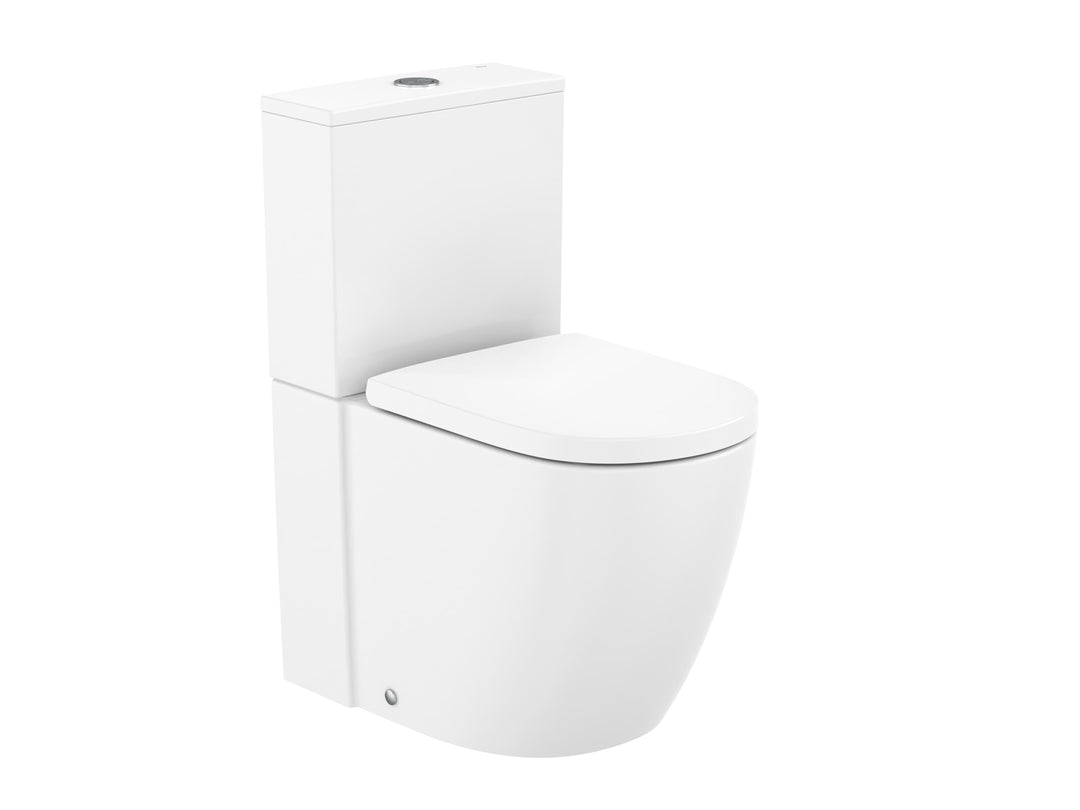
A wall-hung toilet is a bowl anchored to the wall using a concealed metal frame, with the cistern hidden and the sanitary unit not touching the floor; a floor-mounted toilet rests directly on the floor and usually has an exposed cistern. The wall-hung option offers cleaner lines and visual lightness, while the floor-mounted version stands out for its affordable price and much simpler installation.
Choosing between a wall-hung and a floor-mounted toilet is one of the first decisions to make when renovating a bathroom, and it influences the budget, the construction work, and even daily cleaning for years to come. In this comparison, we put both systems head-to-head using actual data from the Merkimarket toilet catalog, so you can make an informed decision without any surprises. You will see the advantages of each, the work involved in each installation, and how to choose the right one for your bathroom.
Key data: wall-hung versus floor-mounted
- Wall-hung toilet: bowl fixed to a frame recessed into the wall, concealed cistern, and free space beneath the bowl.
- Floor-mounted toilet: bowl resting on the floor; can be a close-coupled unit (exposed cistern) or back-to-wall.
- Cleaning: the wall-hung leaves the floor clear and can be mopped underneath; the floor-mounted has joints and a base in contact with the floor.
- Installation: the wall-hung requires a frame and construction work on the wall; the floor-mounted is bolted down and connected directly.
- Price: the wall-hung bowl has a modest starting price, but you must add the frame and the flush plate; the floor-mounted is more economical overall.
- Flushing: both exist in dual-flush versions with rimless technology for better hygiene and water savings.
- Warranty: a legal minimum of three years for consumers in Spain, plus the seller's commercial warranty.
With this summary, you probably already have an idea of what to expect; below we develop each point so that the choice is yours and well-founded.
What is a wall-hung toilet and what is a floor-mounted one
The wall-hung toilet does not touch the floor: the bowl is hung from a metal frame that is recessed inside the wall (or covered with a built-in structure), which houses the cistern and the flushing mechanism. Only the bowl and the flush plate are visible from the outside. The result is a bathroom with clean lines, with the floor left free beneath the bowl.
The floor-mounted toilet is the traditional sanitary fixture: the bowl rests on the floor and is fixed with screws. Within this family, two common formats coexist: the close-coupled version, with the porcelain cistern visible above the bowl, and the back-to-wall version, which places the unit against the wall to hide the connections and gain a more contemporary look without giving up floor support.

Wall-hung toilet: advantages and disadvantages
The great asset of the wall-hung unit is its hygiene and sense of spaciousness. Since the floor remains clear, you can mop under the bowl in one go, and there is no pedestal or joint where dirt can accumulate. In addition, it allows you to adjust the height of the bowl at the time of installation, which is very useful for adapting it to the height of the family or accessibility requirements.
Aesthetically, it lightens the space and is the preferred choice for modern and designer bathrooms. In return, it has two drawbacks: construction work and investment. It needs a frame, a wall capable of housing it, and, almost always, retiling. And if the mechanism fails one day, it is accessed through the flush plate rather than by opening the wall, although it is advisable to choose a branded frame with guaranteed spare parts.
Floor-mounted toilet: advantages and disadvantages
The floor-mounted toilet wins in price and simplicity. A close-coupled set can be installed in a few hours, without structural work, and its total cost—bowl plus cistern—is usually lower than that of a wall-hung unit with a frame. It is also the most forgiving option when the existing drain defines the position and you do not want to break ground.
Its weak points are the reverse of the wall-hung unit's virtues: the supported base creates joints with the floor that must be cleaned, and visually it takes up more space. The back-to-wall version corrects much of this—hiding connections and providing clean lines—without the construction work required for a frame, which is why it has become the favorite middle ground for many renovations.

Head-to-head comparison
Placed side-by-side, these are the differences that really matter when making a decision. The table summarizes the key criteria; neither wins in every category, which is why the choice depends on your priorities.
| Criterion | Wall-hung toilet | Floor-mounted toilet |
|---|---|---|
| Floor cleaning | Excellent: clear floor | Average: supported base and joints |
| Aesthetics | Light and modern | Classic (close-coupled) or current (back-to-wall) |
| Installation | With frame and wall work | Direct bolting, no structural work |
| Bowl height | Adjustable during installation | Fixed (depending on the model) |
| Set cost | Higher (bowl + frame + plate) | Lower |
| Mechanism access | Through the flush plate | Direct, exposed cistern |
| Ideal for | Designer bathrooms and full renovations | Quick changes and tight budgets |
Installation: frame and construction vs. direct mounting
This is where the fundamental difference lies. The wall-hung unit requires a self-supporting or recessed frame that supports the weight of the bowl and the user—certified systems are more than sized for domestic use—and that integrates the dual-flush cistern with silent filling. This frame is anchored to the slab and wall, connected to the drain, and closed off with a wall and tiling, leaving only the flush plate opening. It is an installation that should be left to a professional.
The floor-mounted toilet, on the other hand, is resolved with screws and sealing: the position is marked, the bowl is fixed, it is connected to the drain, and the cistern is mounted on top of the bowl. Fewer steps, less work, and less room for error.

Dimensions, drain outlet, and compatibility
Before buying, always check the drain outlet, because it determines which model fits without the need for jackhammering. Floor-mounted toilets are manufactured with horizontal outlet (to the wall), vertical (to the floor), or dual—the latter being the most versatile because it accepts both connections. Wall-hung units work with horizontal outlets toward the frame. Also check the depth of the bowl: compact models (around 48–54 cm) are the solution for small bathrooms, while standard ones are around 54–60 cm. If you are going to keep the existing drain, a dual-outlet model will save you from surprises.
Price and maintenance: what each option costs
Overall, the floor-mounted toilet is cheaper because it does not require a frame or a plate. The wall-hung is more expensive initially, but its cost is justified by its aesthetics and long-term ease of cleaning. In terms of maintenance, both are simple: in the wall-hung, the mechanism is accessed via the flush plate; in the floor-mounted, by lifting the cistern lid. In both cases, choose dual flush (usually 3/4.5 or 3/6 liters) to save water and prioritize rimless technology, which eliminates the nook where limescale accumulates and facilitates hygiene. Always keep the model reference: this is what you will need to order a mechanism or a replacement seat years later.
How to choose your toilet in 4 steps
- Consider how much construction work you are willing to undertake. If it is a full renovation, the wall-hung pays off; if you are only changing the sanitary unit, go for the floor-mounted.
- Check the drain outlet. See if your discharge is horizontal, vertical, or dual and choose a compatible model to avoid breaking floors.
- Measure the available depth. In tight bathrooms, opt for a compact bowl; leave at least 20 cm of clearance on each side of the center line.
- Complete the set. For a wall-hung unit, choose a matching frame and plate; for a floor-mounted one, decide between a close-coupled or back-to-wall unit and add a soft-close seat.
Ready to see the products? Explore the complete catalog of toilets or compare two references from the same series directly to get an idea: the Roca The Gap Square wall-hung toilet versus its compact floor-mounted dual-outlet version. And if you are also redoing the entire bathroom, our guide on how to renovate the bathroom without expensive mistakes will be useful.
Frequently asked questions
Which toilet is easier to clean, wall-hung or floor-mounted?
The wall-hung, because it leaves the floor free under the bowl and can be mopped underneath without joints or a resting base. Rimless models, available in both formats, further facilitate hygiene by eliminating the internal crevice where dirt accumulates.
Can a wall-hung toilet support weight well?
Yes. The bowl is fixed to a certified metal frame, anchored to the wall and the slab, sized with plenty of margin for domestic use. The key is to install a branded frame with guaranteed spare parts and follow the manufacturer's assembly instructions.
Which is cheaper to install?
The floor-mounted toilet. It does not need a frame, flush plate, or construction work on the wall: it is screwed down, connected to the drain, and the cistern is mounted on the bowl. The wall-hung has a higher total cost due to the frame and the construction work involved.
Can I change a floor-mounted toilet to a wall-hung one without construction work?
Not entirely. Moving to a wall-hung unit requires installing a recessed frame and, usually, redoing the tiling of that wall, in addition to adapting the drain outlet. If you do not want construction work, the most similar aesthetic alternative is a back-to-wall floor-mounted model.
Article written by the Merkimarket editorial team. Technical data (formats, outlets, dimensions, and flushing systems) taken from the Merkimarket toilet catalog. Price ranges and availability may vary; check each product page for information current in Spain.





