

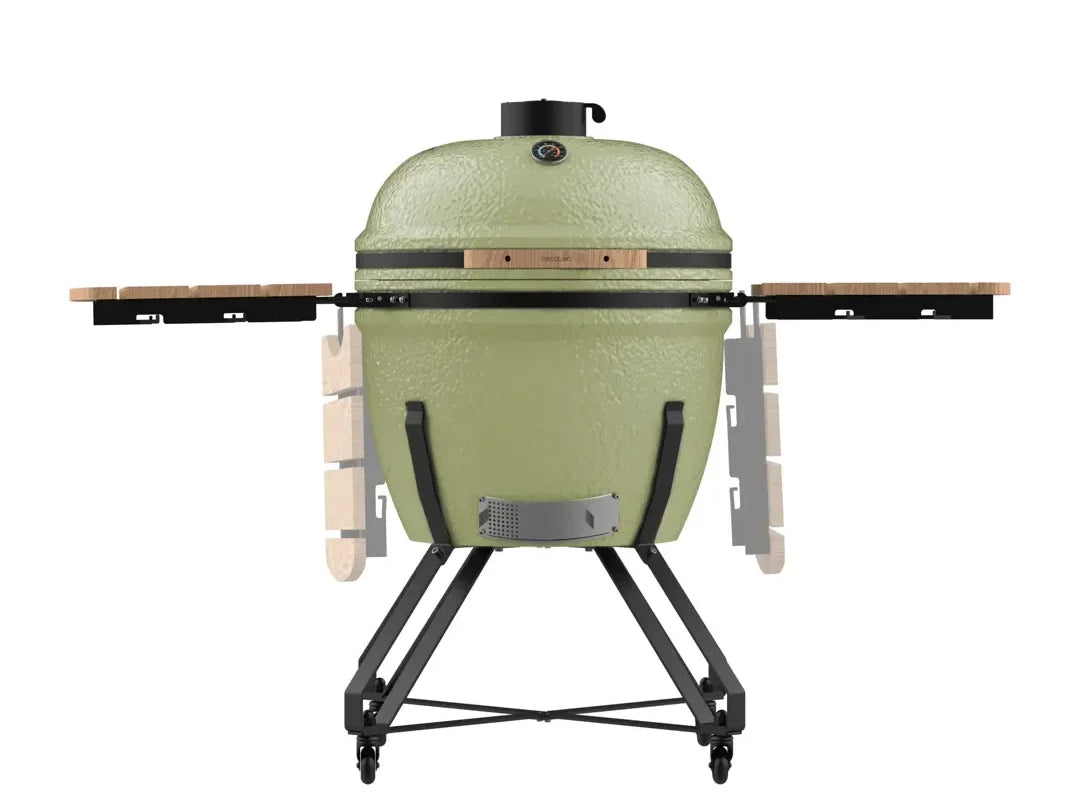
A barbecue is an outdoor cooking appliance that grills and browns food using direct or indirect heat. The four main types are charcoal (classic smoky flavor), gas (instant temperature control), electric (no smoke or embers, ideal for terraces), and the kamado, a ceramic barbecue that reaches extreme temperatures and retains heat for hours.
Choosing a barbecue seems simple until you find yourself in front of dozens of models with very different prices and features. The real decision is not about the brand, but the fuel and format: this determines the flavor, ignition time, where you can use it, and how much maintenance it will require. In this guide, we review the types of barbecues one by one, with a comparison table and a step-by-step method to help you make the right choice. The technical data is taken from the real specification sheets of the Merkimarket barbecue catalog.
Key facts about barbecue types
- Main types: charcoal, gas, electric, and kamado (ceramic).
- Smoky flavor: provided by charcoal and wood; gas and electric produce virtually no smoke.
- Ignition: instantaneous for gas and electric; between 20 and 40 minutes for charcoal and kamado.
- Indoor or closed balcony use: only electric is suitable; charcoal, gas, and kamado require a ventilated or outdoor space.
- Maximum temperature: ceramic kamados reach ranges of up to 1000 °C depending on the model; electric ones work with an adjustable thermostat.
- Typical electrical power: between 2000 and 3000 W for tabletop and standing models.
- Warranty: statutory minimum of three years for consumers in Spain, plus the seller's commercial warranty.
With this summary, you can now find your bearings; below, we develop each type so you can choose with criteria.
Charcoal barbecue: the classic flavor
It is the quintessential barbecue and the reference when someone thinks of "charcoal flavor." As charcoal burns, it generates smoke and aromatic compounds that permeate meat and fish with that smoky nuance that no other system reproduces equally. In exchange, it requires patience: you have to light the charcoal, wait for the embers to form (about 20-30 minutes), and learn to manage the heat zones by moving the coals.
It is the most economical entry-level option and the most versatile for those who enjoy the ritual. Its weak point is cleaning—ashes after every use—and it absolutely requires a well-ventilated outdoor space. Within charcoal, there is a variant that currently leads the premium segment: the kamado, which we cover below due to its unique performance features.
Gas barbecue: control and speed
The gas barbecue works with a butane/propane cylinder or natural gas connection and lights with a button. Its great advantage is precise and instant temperature control: you turn the flame up or down just like in a kitchen and, with multiple burners, you create direct and indirect heat zones without moving coals. It heats up in five minutes and cleaning is minimal, with no ashes.
The cost is twofold: a higher purchase price than an equivalent charcoal one and a much more neutral flavor, without the smokiness of charcoal (though this can be compensated with smoker boxes). It is the ideal barbecue for those who cook often and value comfort over the smoky nuance. As with any gas appliance, periodic inspection of hoses and connections is non-negotiable.
Electric barbecue: for terraces, balconies, and small spaces
The electric barbecue replaces embers with a heating element that warms a plate or grill. It produces neither smoke nor flame, so it is the only one suitable for closed balconies and even well-ventilated interiors, where charcoal and gas are ruled out by community regulations or safety concerns. It plugs in, is regulated by a thermostat, and is ready in minutes.
In the catalog, you will find standing and tabletop models, with power ranging from about 2400 W for the compact ones to 3000 W for those with a larger surface, with a stainless steel grill and adjustable thermostat—like the 3000 W stainless steel electric barbecue. In exchange for that comfort, you give up the smoky flavor and depend on a nearby power outlet. It is the best choice for apartments, urban terraces, and quick uses during the week.

Kamado barbecue: the ceramic that cooks everything
The kamado is a charcoal barbecue with a ceramic body and ovoid shape, heir to ancient Asian ovens. Its thick ceramic wall does two things that a metal barbecue cannot: it retains heat for hours with very little fuel and reaches extreme temperatures. Models like the 66 cm DragonFire kamado work in ranges of up to 1000 °C thanks to its air intake control.
That versatility makes it four appliances in one: open-fire grill, pizza oven, low-temperature smoker, and slow roaster. The air control via the top and bottom valves regulates the temperature with surprising precision for charcoal. Its drawbacks are the price—it is the most expensive category—and the weight of the ceramic. If you are looking for a more manageable version, there are compact formats like the 32 cm kamado, perfect for two or three people.

Comparison table: which barbecue suits you
Before deciding, compare the four types on the variables that truly make the difference in day-to-day life:
| Type | Smoky flavor | Ignition | Where to use | Maintenance |
|---|---|---|---|---|
| Charcoal | Maximum | 20-30 min | Only ventilated exterior | High (ashes) |
| Gas | Low | Immediate | Exterior or open porch | Low |
| Electric | None | Immediate | Terrace, balcony, and ventilated interior | Very low |
| Kamado | Maximum | 25-40 min | Only ventilated exterior | Medium |
How to choose your barbecue in 5 steps
- Look at where you are going to cook. If it is a balcony or closed terrace, the answer is electric; for a garden or open porch, all options are open.
- Decide how much you value the charcoal flavor. If it is a priority, charcoal or kamado; if you prefer comfort and speed, gas or electric.
- Calculate the usual number of guests. For 2-3 people, a compact or tabletop format is sufficient; for large gatherings, look for a large grill or a kamado of 60 cm or more.
- Set the real budget. Rank from lowest to highest: charcoal, electric, gas, and kamado, which is the highest investment but also the most versatile and durable.
- Add accessories. Tongs, protective cover, thermometer, or grill expander make the difference; many are sold in packs that match the model.
Basic maintenance and safety
Whatever the type, three habits extend the life of your barbecue and avoid scares. First, clean the grill while hot after each use with a brush, and remove ashes and grease once cool to avoid corrosion and flare-ups. Second, protect it from the elements with a cover: humidity is the main enemy of steel and gaskets. And third, respect safety distances from walls, awnings, and vegetation, and for gas ones, check hoses and connections at the beginning of each season.
Regarding your rights as a buyer, any barbecue purchased by a consumer in Spain has a minimum statutory warranty of three years against lack of conformity, which the seller can supplement with their own commercial warranty and spare parts service. Keep the model reference to order replacements such as grills, heating elements, or gaskets over the years.
Frequently asked questions about barbecues
Which barbecue is better, charcoal or electric?
It depends on the use. Charcoal offers the classic smoky flavor but can only be used outdoors and creates more mess; electric does not smoke, but it is the only one suitable for balconies and ventilated interiors and requires virtually no cleaning. For apartments and urban terraces, electric wins; for garden and charcoal flavor, charcoal.
Can an electric barbecue be used indoors?
Yes, as long as it is a model designed for it and the room is well-ventilated, because it does not generate combustion smoke or embers. Even so, it is advisable to use the extractor hood or open windows, as grilling fat always produces some smoke.
What is the advantage of a kamado barbecue over a standard one?
Its ceramic body retains heat for hours with very little charcoal and reaches very high temperatures, allowing it to be used as a grill, pizza oven, smoker, and slow roaster in a single appliance. In exchange, it is more expensive and heavy.
How much power does an electric barbecue need?
Typical models range from about 2400 W for compact tabletop units to 3000 W for larger surface areas. More power means the plate recovers temperature faster when adding food, which is useful if you are cooking for several people in a row.
When you are clear about the type, compare models and accessories in the Merkimarket barbecue catalog. And if you are fully equipping your home kitchen, you will be interested in our guides on modern kitchens and the essential appliances for a modern kitchen.
Article written by the Merkimarket editorial team. Technical data (power, materials, and temperatures) taken from the Merkimarket barbecue catalog sheets. Price ranges and availability may vary; check each product sheet for the latest information in Spain.





