

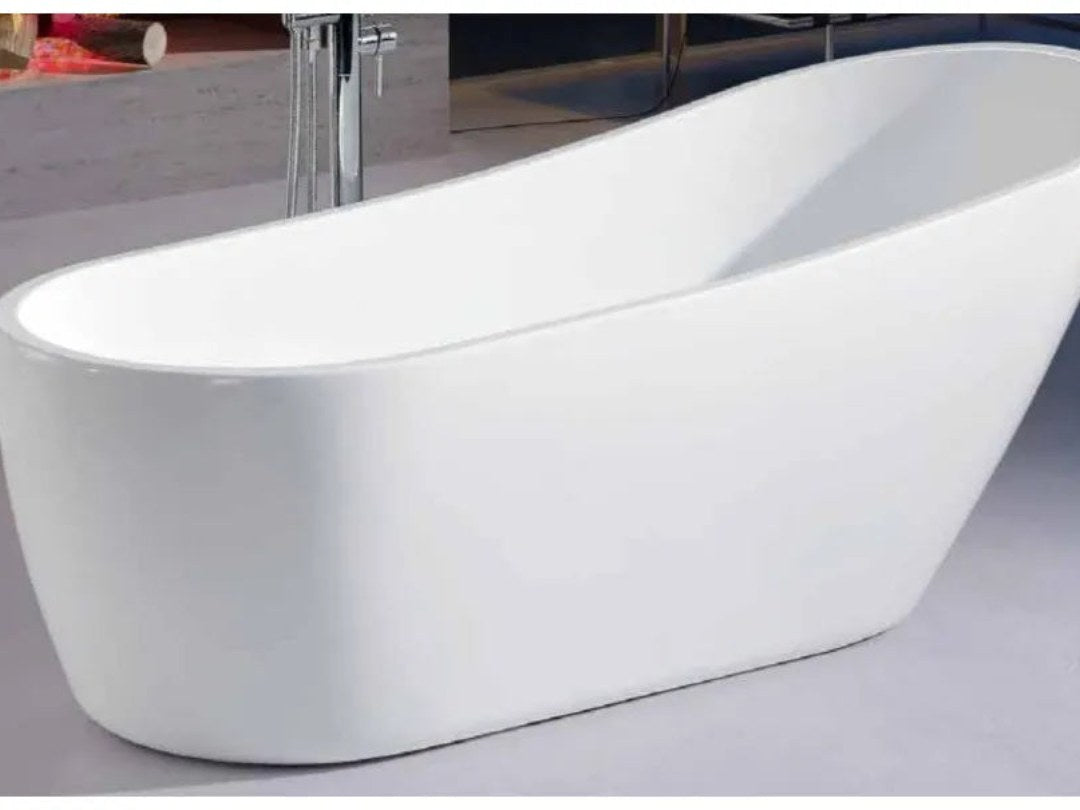
A bathtub is a bathroom fixture designed for immersion bathing, available in two main formats: freestanding (a standalone piece, not in contact with walls) and built-in or recessed (integrated between walls or within a cabinet). They are primarily manufactured in acrylic or enameled steel, and the choice depends on the available space, the type of installation, and the drainage system.
Changing or installing a bathtub involves more decisions than meets the eye: freestanding or built-in, acrylic or steel, with or without a front panel, and what size will actually fit in your bathroom. This guide organizes those decisions so you can buy with confidence. Technical data and examples are taken from actual product pages in the Merkimarket bathtub collection, which features brands such as Aquore, Unisan, and Roca.
Key bathtub data
- Formats: freestanding (independent, visible on all four sides) and built-in or recessed (between walls, with one or more sides hidden).
- Common materials: acrylic (lightweight, warm to the touch) and enameled steel (more robust and economical in standard sizes).
- Most common dimensions: 120 to 190 cm long and 70 to 90 cm wide for rectangular models.
- Installation accessories: front panel or apron to cover the visible side, drain valve (manual or automatic), and adjustable legs.
- Optional extras: hydromassage, headrests, and side handles on high-end models.
- Associated faucets: single-lever, thermostatic, or a set with a hand shower, always in a finish that matches the rest of the bathroom.
- Warranty: statutory minimum of three years for consumers in Spain, plus the seller's commercial warranty.
With this summary, you have the roadmap; we expand on each point below so you can choose without making a mistake.
Freestanding or built-in bathtub: the first criterion
The decision that dictates all others is the format, and it depends on the available space and the effect you are looking for.
Freestanding bathtub. It is an independent piece that does not touch any wall, designed to serve as a central element of the bathroom. It requires more free space around it (usually at least 10-15 cm on each side for cleaning and installing the drain) and is usually accompanied by a floor-mounted or exposed wall-mounted faucet, such as the Tasmania freestanding bathtub by Aquore, 150 x 70 cm in white acrylic. It is the most common option in design-oriented renovations of spacious bathrooms.
Built-in or recessed bathtub. It is integrated between walls or within a cabinet, with one, two, or three sides hidden. It makes better use of space in mid-sized bathrooms and allows for a front panel or apron to conceal the structure, as seen in the Contesa and Easy models by Roca. It is the most common solution when replacing an old bathtub with one that fits the same opening.

Acrylic or steel: which material to choose
The material not only affects the price, but also the weight, thermal sensation, and maintenance.
Acrylic. It is the benchmark material for freestanding bathtubs and the majority of current built-in models. It is lightweight, maintains water temperature better, and allows for more intricate shapes (curved, oval, with integrated headrests). Conversely, it is somewhat more sensitive to abrasive products and burns from cigarettes or very hot objects.
Enameled steel. It is heavier and noisier when filling, but very resistant to impact and abrasion, and it is usually the most economical option in standard sizes, as shown by the different lengths of the Roca Contesa series (120, 150, 160, and 170 cm). It loses heat slightly faster than acrylic, although in daily use, it is barely noticeable.
Quick comparison of formats and materials
| Model | Format | Material | Dimensions | Ideal for |
|---|---|---|---|---|
| Tasmania by Aquore | Freestanding | Acrylic | 150 x 70 cm | Design-oriented, spacious bathrooms |
| Contesa by Roca | Built-in | Enameled steel | 120 to 170 cm | Economical replacement in the same opening |
| Easy by Roca | Built-in | Acrylic | 160 and 170 cm | Renovation with a good price-comfort balance |
| TwoSpace by Unisan | Built-in | Acrylic | 180 cm, with optional hydromassage | Large bathrooms seeking extra comfort |

Dimensions: how to know what fits in your bathroom
Before choosing a model, there are three measurements to be clear about:
- Opening length. Rectangular built-in bathtubs typically range between 120 and 190 cm; measure the existing opening if you are replacing a bathtub with one of the same size.
- Width. The standard is around 70-80 cm, although models with hydromassage or headrests can reach 90-120 cm.
- Free space around (freestanding only). Leave enough margin on all four sides to be able to clean it and for the floor or wall faucet to be properly positioned.
- Height of the drain and water supply. Check this before buying, especially if you are keeping the existing plumbing.
Installation accessories: front panel, valve, and faucets
A bathtub is rarely installed alone; these are the accessories to keep in mind from the very first moment:
Front panel or apron. It covers the visible side of a built-in bathtub and conceals the supporting structure, such as the Roca 150 cm acrylic front panel. This is essential if any side remains visible after tiling.
Drain valve. This can be manual (plug with a chain) or automatic (with a control integrated into the panel or the faucet itself), and it is best to order it in the same finish as the rest of the bathroom faucets.
Faucets and shower head. A bathtub faucet can be single-lever, thermostatic, or come in a set with a hand shower; if you also want to transform the bathtub into an occasional shower area, an Imex waterfall tub or shower faucet resolves that mixed use without additional construction work. To learn more about faucet types by zone, we have a specific guide on bathroom faucets.
How to choose your bathtub in 4 steps
- Decide on the format. Freestanding if you are looking for a design piece and have plenty of space; built-in if you are replacing an existing bathtub or the bathroom is mid-sized.
- Choose the material. Acrylic for more warmth and intricate shapes; enameled steel if you prioritize durability and a tight budget.
- Confirm the dimensions. Length and width of the opening, and perimeter space if it is freestanding.
- Finalize the accessories. Front panel if needed, valve (manual or automatic), and faucets that match the rest of the bathroom.
Ready to see the products? Explore the entire Merkimarket bathtub collection or go directly to two popular references to get an idea of quality and finish: the Tasmania freestanding bathtub by Aquore and the Easy built-in bathtub by Roca. And if what you value is gaining space and accessibility, you might be interested in our guide on replacing your bathtub with a shower tray.
Frequently asked questions about bathtubs
What is the difference between a freestanding and a built-in bathtub?
A freestanding tub is an independent piece that does not touch any wall and needs free space around it; a built-in tub is integrated between walls or within a cabinet, with one or more sides hidden, making better use of space in mid-sized bathrooms.
Is an acrylic or steel bathtub better?
Acrylic weighs less, maintains water temperature better, and allows for more intricate shapes; enameled steel is more resistant to impact and abrasion and is usually more economical in standard sizes. Neither is better in absolute terms: it depends on your priority.
What size bathtub do I need?
If you are replacing an existing bathtub, measure the current opening (typically 120 to 190 cm long and 70-90 cm wide). If it is a new, freestanding installation, leave enough margin around it for cleaning and the faucets.
Do I need to buy the front panel or apron separately?
In many built-in models, yes: the front panel is sold as a separate accessory and covers the visible side of the bathtub. Check your model's product page to see if the panel is included or needs to be added.
Article written by the Merkimarket editorial team. Technical data (formats, materials, and dimensions) taken from the product pages of the Merkimarket bathtub collection. Price ranges and availability may vary; check each product page for current information in Spain.





