

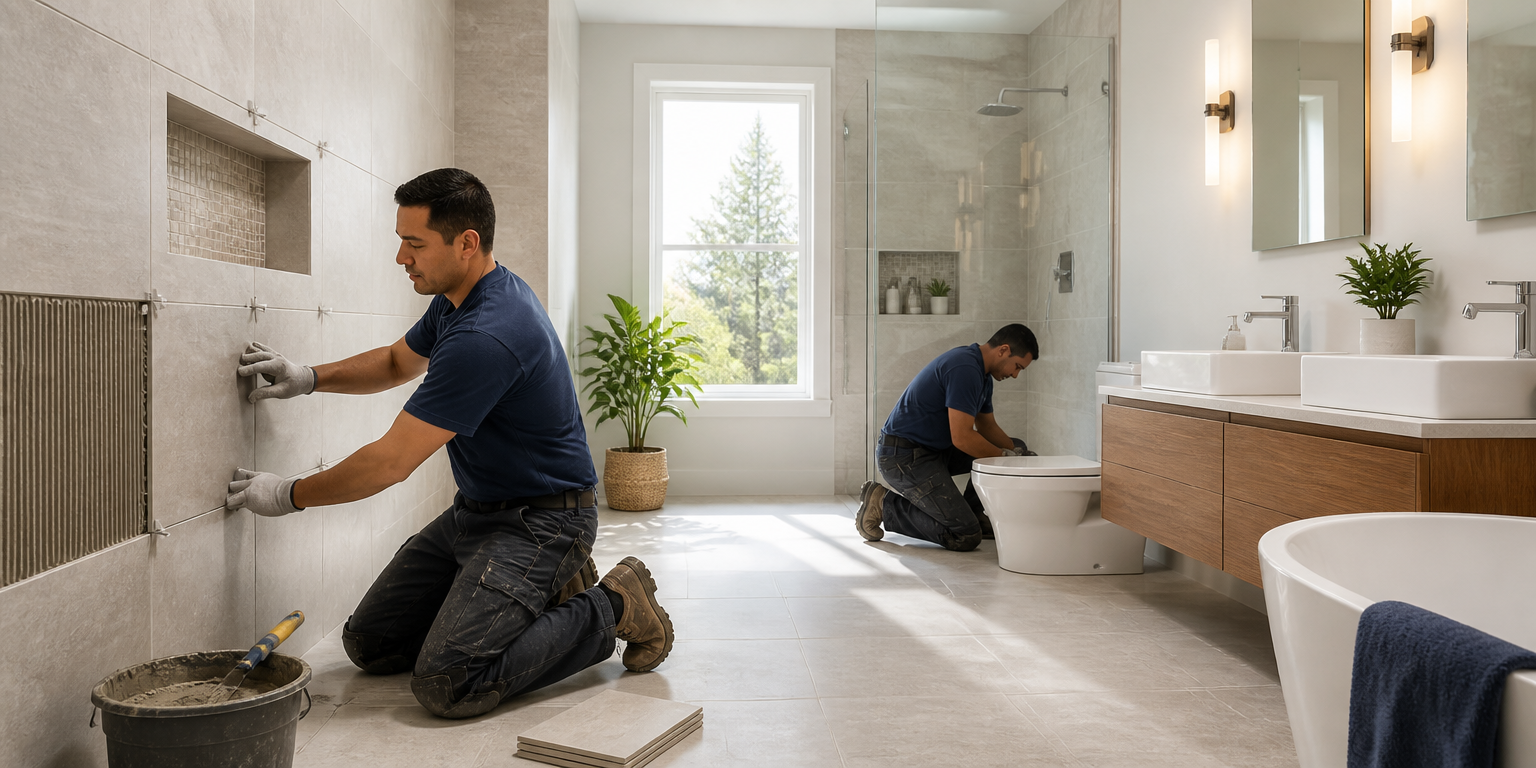
Renovating a bathroom is the process of updating its facilities and finishes—plumbing, electrical, tiling, sanitary ware, shower enclosures, and furniture—following an orderly set of phases: design, demolition, installations, tiling and flooring, installation of sanitary ware, and final finishing touches. An average renovation lasts between one and three weeks, and its cost depends on the scope, materials, and the initial state of the space.
Renovating a bathroom is one of the interventions that most changes the feel of a home and, at the same time, one of the most poorly planned. Most of the surprises do not come from the design, but from the order of the work, poorly calculated deadlines, and decisions made too late. This guide organizes the renovation into clear phases, gives you realistic deadlines for each stage, and gathers the mistakes that most increase the cost of the project, with data and products taken from the Merkimarket bathroom catalog.
Key facts about a bathroom renovation
- Average duration: 1 to 3 weeks of actual work for a standard 4-6 m² bathroom, depending on the scope.
- Main phases: design and purchasing, demolition, installations (plumbing and electrical), tiling and flooring, installation of sanitary ware, and finishing touches.
- Critical point: hidden installations (water, drains, and electricity) must be decided before tiling; changing them afterward requires breaking open walls again.
- Highest impact decision: replacing the bathtub with a shower tray, which gains space and accessibility.
- Materials that determine lifespan: brass faucets with ceramic cartridges, porcelain sanitary ware, and resin or fireclay trays.
- Warranty: products purchased by consumers in Spain have a legal minimum of three years against defects of conformity.
With this summary, you already have the map; below we develop each point so that you arrive at the project with decisions already made.
What renovating a bathroom implies (define the scope first)
Before requesting quotes, it is advisable to know what type of renovation you want, because the deadline, cost, and disruption depend on it. A full renovation changes everything: sanitary ware, tiling, flooring, plumbing, electrical, shower enclosure, and furniture. A partial renovation or "facelift" only acts on what is visible—changing faucets, replacing the toilet, installing a new enclosure, or painting—without touching the hidden installations. The rule of thumb is simple: if you are going to move water outlets or drains, it is already a full renovation even if it doesn't seem like it, because it involves breaking walls and re-tiling.
Also define the goal. Modernizing the aesthetics is not the same as gaining accessibility for an elderly person or squeezing every centimeter out of a small bathroom. That goal conditions the first decisions: changing the bathtub for a shower tray, choosing a compact toilet, or opting for wall-mounted furniture that clears the floor.
The phases of a bathroom renovation, step-by-step
The secret to a renovation without surprises is to respect the order. Each phase leaves the ground ready for the next, and skipping one almost always forces you to redo work.
- Design, measurement, and purchasing. The layout is defined, measurements are taken, and sanitary ware, faucets, enclosure, and furniture are purchased (or at least reserved). Buying before demolition avoids the most expensive mistake: discovering halfway through the project that the chosen piece does not fit or takes weeks to arrive.
- Demolition and removal. Old sanitary ware, tiles, and flooring are removed and the debris is cleared. This is where the surprises about the actual state of the walls and pipes appear.
- Plumbing and electrical installations. Cold and hot water outlets, drains, and lighting points and sockets are repositioned according to the new design. It is the invisible phase that decides everything else.
- Tiling, flooring, and waterproofing. Wet areas (shower) are waterproofed, walls are tiled, and the floor is laid. From this point on, moving an installation involves breaking things.
- Installation of sanitary ware and furniture. The toilet, sink, cabinet, enclosure, and faucets are mounted on the finished surface.
- Finishing touches, sealing, and inspection. Sealing joints with silicone, installing accessories, checking for leaks, and final cleaning. This is the phase that separates a correct job from an impeccable one.

How long does a bathroom renovation take: realistic deadlines by phase
The deadlines that follow correspond to a standard 4-6 m² bathroom with a full renovation and a single, well-coordinated team of tradespeople. These are not fixed calendar times: there are technical waits between phases (mortar setting, waterproofing drying) that cannot be accelerated.
| Phase | Indicative duration | What delays it |
|---|---|---|
| Design and purchasing | Days or weeks (before the project) | Delivery times for sanitary ware and enclosures |
| Demolition | 1 day | Debris removal, structural surprises |
| Plumbing and electrical | 1-2 days | Last-minute layout changes |
| Tiling and flooring | 3-5 days | Drying of material, complex stoneware formats |
| Sanitary ware and furniture | 1-2 days | Incomplete or damaged pieces in transport |
| Finishing touches and inspection | 1 day | Pending touch-ups and sealing |
Adding up drying waits, it is usual for a bathroom to be ready in one to three weeks. If you are given a two-day deadline for a full renovation, be wary: there is no actual time for the wet work to set.
Mistakes that turn out to be expensive (and how to avoid them)
Almost all cost overruns in a bathroom renovation repeat themselves. These are the most frequent ones and their antidote:
Buying late. Starting to break things open without having the sanitary ware and enclosure at home is the fast track to a standstill: if the piece doesn't arrive, the work stops with an unusable bathroom. Reserve the material before demolition.
Deciding on installations on the fly. Moving the toilet outlet or shower drain after tiling means breaking a new wall. Finalize the layout in the design phase, not when the tile is already installed.
Skimping on what you don't see. An excessively light faucet usually hides zamak interiors instead of brass, and poorly done waterproofing in the shower ends up in dampness in the neighboring room. Here it is advisable to look at quality, not just price. Our guide on how to choose bathroom faucets without making a mistake will help you. And if you are going to renovate the shower area, our shower column guide helps you choose between single-lever, thermostatic, or hydromassage models.
Ignoring outlet and drain measurements. Not all toilets work for your bathroom: the outlet can be vertical (to the floor) or horizontal (to the wall), and getting it wrong forces the use of adapters or breaking walls. Before buying, review the types of toilets according to outlet and measurements.
Not planning for sealing and finishing touches. Poorly sealed silicone joints are the source of most medium-term dampness issues. It is cheap to do it right and very expensive to repair it later.
Replacing the bathtub with a shower tray: the most profitable renovation
If your bathroom still has a bathtub that almost no one uses, replacing it with a shower tray is probably the intervention with the best return: you gain usable surface area, improve accessibility, and modernize the aesthetics in one fell swoop. Current trays, extra-flat and flush with the floor, avoid steps and make cleaning easier. Materials such as resin or fireclay provide strength and non-slip finishes; in the catalog, you will find options such as the Waterline extra-flat shower tray by Unisan. To choose the right material, measurements, and type of drain, use our shower tray guide.

Sanitary ware, furniture, and faucets: what to look for when choosing
The quality of a renovation depends as much on the workmanship as it does on the pieces. Three keys before deciding:
Sanitary ware. Porcelain is the standard for hygiene and durability. Rimless technology (without an interior flange) cleans better and flushes dirt with less water, something that is appreciated every day. Also think about height: comfort-height models are more comfortable for older people.
Furniture. Wall-mounted furniture clears the floor, visually enlarges the bathroom, and facilitates cleaning. An example of a compact format is the Alicante 60 cm wall-mounted bathroom cabinet by Unisan, designed for tight spaces without giving up storage.
Faucets. Look for a brass body and a ceramic cartridge, which is what guarantees smooth operation without drips for years. A detail that gives a feeling of a cohesive set: choose the same finish—chrome, matte black, brushed gold—for the faucet, drain, and exposed siphon.

How to plan the budget without surprises
The cost of renovating a bathroom depends on three variables: the scope (partial or full), the quality of the materials, and the initial state of the installations. Before signing anything, ask for a budget broken down by items—demolition, plumbing, electrical, tiling, sanitary ware, and labor—to know exactly what you are paying for and to be able to compare offers fairly. Also, reserve a margin of 10-15% for unforeseen events: as soon as old walls are broken open, something that was not visible almost always appears. And remember that buying the sanitary ware and faucets yourself in a specialized store is usually more worthwhile than leaving everything in the hands of the tradespeople, provided you are clear about the measurements. If you want to avoid common pitfalls, it will be useful to review the most common mistakes when renovating the bathroom.
Frequently asked questions about renovating a bathroom
How long does it take to renovate a bathroom?
A full renovation of a standard 4-6 m² bathroom usually takes between one and three weeks of work, counting the drying times for mortar and waterproofing. A partial renovation, without touching installations, can be resolved in a few days.
What is the correct order of a bathroom renovation?
Design and purchasing, demolition, plumbing and electrical installations, waterproofing and tiling, installation of sanitary ware and furniture, and finally finishing touches and sealing. Respecting that order avoids having to redo work.
What mistakes make a bathroom renovation more expensive?
Buying materials late, changing the water or drain layout after tiling, skimping on waterproofing, and neglecting final sealing. All force you to redo work that has already been paid for.
Is it worth changing the bathtub for a shower tray?
In most cases, yes: you gain usable space and accessibility, the bathroom is modernized, and cleaning is simpler, especially with extra-flat trays flush with the floor.
Article written by the Merkimarket editorial team. The products cited come from the Merkimarket bathroom catalog; deadlines are indicative and vary according to the scope of each project. Check each product sheet for information and availability in Spain.





