

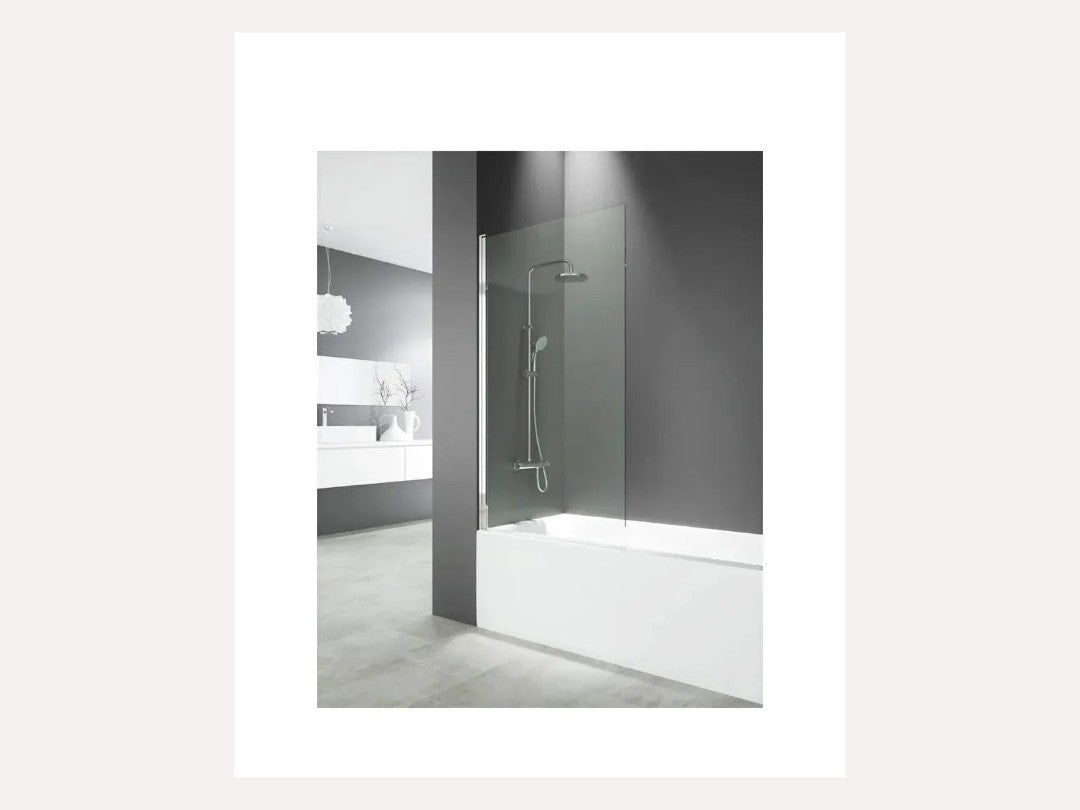
A bathtub screen is a tempered glass enclosure that replaces the curtain to prevent splashing, and it is installed as fixed, hinged, or with a sliding panel on the edge of the bathtub, in widths ranging from 70 to 180 cm depending on the model and the size of the opening.
Key facts
- 6 or 8 mm tempered safety glass, with an anti-limescale treatment such as Enduroshield or similar.
- Three main configurations: fixed front, hinged front, and front with a fixed plus a sliding panel.
- "Custom" versions cover width ranges (for example, 140–170 cm) and are trimmed during installation.
- The standard height of the front profile is 140–150 cm above the bathtub edge.
- 3-panel corner models allow for enclosing bathtubs in corners or with two visible fronts.
- The profile is usually chrome, white, or matte black aluminum, matching the fixtures.
Why install a screen instead of a curtain
A shower curtain sticks to your body with hot water, does not prevent water from splashing onto the floor when using a handheld showerhead, and must be washed or replaced regularly because it accumulates mold in the lower folds. A tempered glass screen solves all three problems: it does not move with air or water, it is transparent so it does not reduce the sense of space, and it is cleaned with a squeegee and an anti-limescale product because the glass usually has a treatment that repels limescale and reduces water spot formation. Furthermore, being a fixed or hinged element on an aluminum profile, it withstands the spray from an adjustable showerhead better than a simple curtain.
Types of bathtub screens
Fixed front
This is a single panel of tempered glass that is screwed to the edge of the tub and the wall, with no moving parts. It is the most economical and resistant option because it has no hinges or rails that can become misaligned, but it requires the user to enter from the open side, so it only makes sense for bathtubs with free access at one end.
Hinged front
It adds an articulated panel with hinges to the fixed panel, allowing it to open outward to facilitate entry and cleaning of the inside of the tub. It is the most common configuration in renovations because it combines watertightness with daily ease of use.
Front with fixed and sliding panel
A fixed panel and a sliding panel are mounted on a lower and upper rail, like a miniature sliding door. It allows for adjustable opening and is the most practical solution in narrow bathrooms where a hinged panel would hit the sink or bidet when opened.
3-panel corner screen
Used for bathtubs located in a corner with two exposed sides: two fixed panels in an L-shape plus a hinged or sliding panel enclose the entire unit on both fronts. It is the option with the most glass surface area and the best at sealing a bathtub without a supporting wall on one of its sides.

Dimensions: how to measure the bathtub opening
Before choosing a model, take three measurements with the bathtub already installed:
- Width of the bathtub edge from end to end, at at least two points (front and back), as there may be a slight difference due to construction.
- Height from the bathtub edge to the ceiling or to the point where you want the screen to end, to confirm that the 140–150 cm profile is sufficient or if a taller model is needed.
- Presence of obstacles: fixtures, fixed showerheads, or built-in shelving that may interfere with the path of a hinged or sliding panel.
With those measurements, a "custom" model with a range of 140–170 cm or 152–182 cm is trimmed on the aluminum profile itself during installation to fit perfectly, so you do not need to hit an exact factory measurement.
| Type | Opening | Best for | Maintenance |
|---|---|---|---|
| Fixed front | None (fixed panel) | Bathtubs with free side access | Very low, no hinges |
| Hinged front | Panel swings out | Daily use and easy cleaning | Check hinges and seals |
| Fixed + sliding | Horizontal sliding | Narrow bathrooms with nearby sink | Clean bottom rail |
| 3-panel corner | Hinged or sliding panel | Corner bathtubs, two fronts | More glass surface to clean |
Safety: why tempered glass matters
The 6 or 8 mm tempered glass undergoes a thermal process that makes it several times more impact-resistant than standard glass of the same thickness, and if it does break, it shatters into small, blunt pieces rather than sharp shards. It is the only type of glass that should be used in a bathtub screen, as required by construction safety regulations for enclosures in wet areas. An 8 mm thickness provides a more solid and quiet feel when closing the hinged panel, while 6 mm reduces the weight on the hinges for large panels.

Profile and finish: matching the fixtures
The screen's aluminum profile is usually manufactured in chrome, white, or matte black. It is advisable to choose it to match or intentionally contrast with the finish of the bathtub and shower fixtures: a black profile pairs well with black or chrome straight-line fixtures, while chrome is the most neutral option if the bathroom already features multiple metallic finishes.
How to choose in 4 steps
- Measure the actual width of the bathtub edge at two points and note the range in centimeters.
- Decide the type of opening based on the free space in front of the tub: fixed if there is side access, hinged or sliding if there is not.
- If the bathtub is in a corner with two exposed sides, consider a 3-panel corner model instead of a single front one.
- Choose the profile finish to match the fixtures and confirm that the glass is 6 or 8 mm tempered with an anti-limescale treatment.
Frequently asked questions
Which glass thickness is better, 6 or 8 mm?
Both are tempered safety glass. The 8 mm is slightly more robust and quieter when closing the hinged panel; the 6 mm is lighter and common in large fixed panels. The choice depends more on the model configuration than a difference in safety between the two.
Can I install a screen if my bathtub does not have a standard size?
Yes. "Custom" models cover a width range (for example, 140–170 cm) and the aluminum profile is trimmed on-site to fit the actual opening exactly.
Can the hinged screen be removed to clean the bathtub thoroughly?
The panel cannot be removed without dismantling the hinges, but since it swings outward, it leaves almost the entire interior of the tub clear for cleaning without obstacles.
What maintenance does glass with anti-limescale treatment require?
It is enough to dry it with a squeegee after each use and apply a mild anti-limescale product periodically; the factory treatment reduces lime adhesion but does not eliminate it permanently.
GME bathtub screens at Merkimarket
In our bathtub screen collection you will find the configurations described in this article, all from the GME brand with tempered glass and anti-limescale treatment: hinged front models for convenient access, and custom front with fixed and sliding panel versions for narrow bathrooms. If the bathtub is in a corner, the 3-panel black corner screen closes both fronts with a single custom-made unit.
If you have a shower tray instead of a bathtub, you might be interested in our guide on shower screens: types, dimensions, and how to choose the right one, and if you are still deciding between a bathtub and a shower tray, you can first read how to choose a bathtub: freestanding, built-in, materials, and sizes.
Guide prepared by the Merkimarket editorial team based on manufacturers' technical data sheets and our suppliers' installation experience.





