Calculating the cooling capacity (frigorías) of an air conditioner means estimating the cooling power a room needs based on its square metres. The practical rule starts at around 100 frigorías per square metre and is adjusted for orientation, insulation and use; in domestic split units this equates, as a guide, to 9,000, 12,000, 18,000 or 24,000 BTU.
Choosing an air conditioner on price or looks and leaving the power rating for last is the mistake that costs the most: an underpowered unit will not cool on the really hot days, while an oversized one switches on and off non-stop, uses more energy and dehumidifies worse. In this guide we explain how to calculate the frigorías you need per square metre, which factors change that number and how to translate it into the BTU you will see on the product pages. All power and consumption figures are taken from the real listings of the split air conditioners at Merkimarket.
Key facts for calculating frigorías
- Base rule: around 100 frigorías/hour per square metre in an average home; drop to 80 if insulation is good and rise to 120-150 with lots of sun or poor windows.
- Frigoría: a cooling unit equal to 1 kcal/h; it measures the heat the unit is able to remove from the room.
- Conversion: 1 BTU/h equals 0.252 frigorías/hour, so 12,000 BTU is about 3,000 frigorías.
- Common equivalences: 9,000 BTU ≈ 2,270 fg, 12,000 BTU ≈ 3,000 fg, 18,000 BTU ≈ 4,500 fg and 24,000 BTU ≈ 6,000 fg.
- Heat pump: most current split units also heat in winter, so the same calculation works as a reference for both cooling and heating.
- Efficiency: check the SEER (cooling) and the SCOP (heating); the higher they are, the less power the unit uses to deliver the same frigorías.
With these figures in mind, let's see how to apply them to your specific case.
Black Friday deals on air conditioning
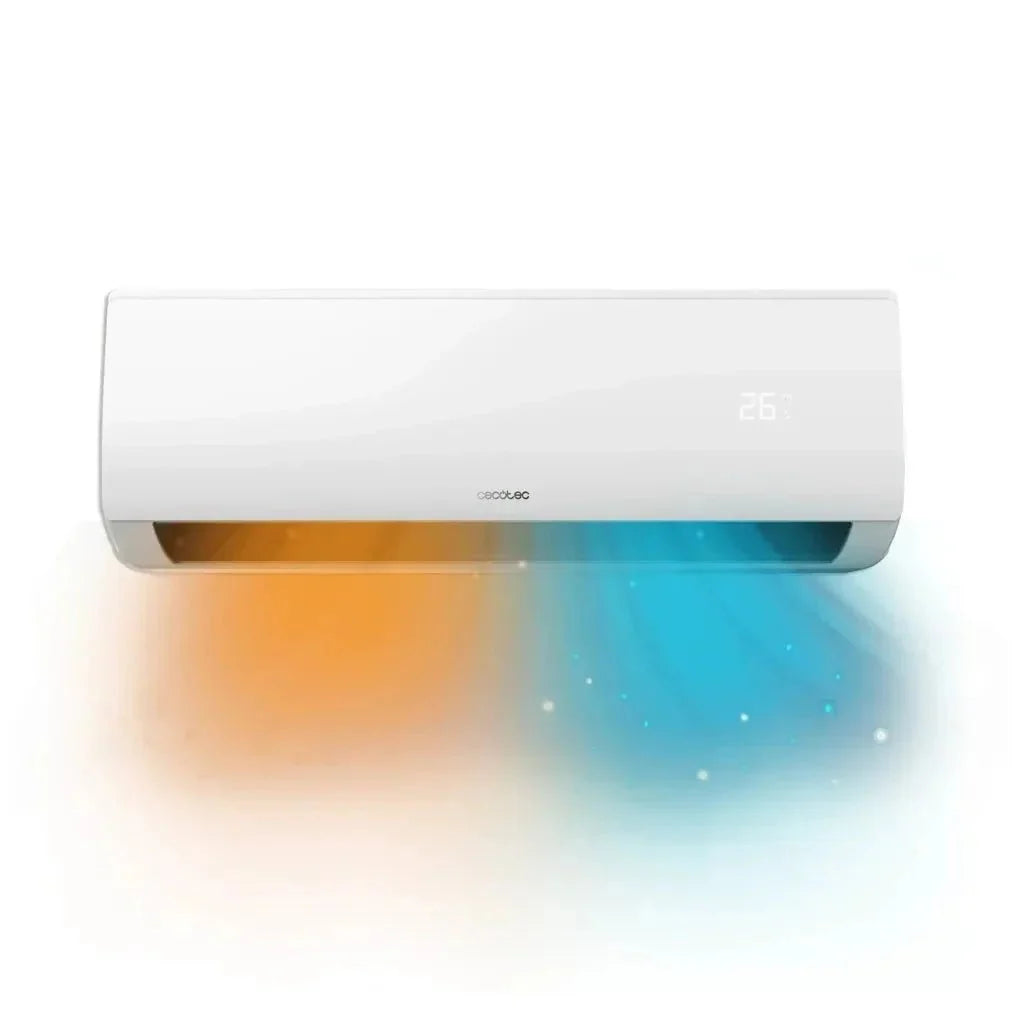
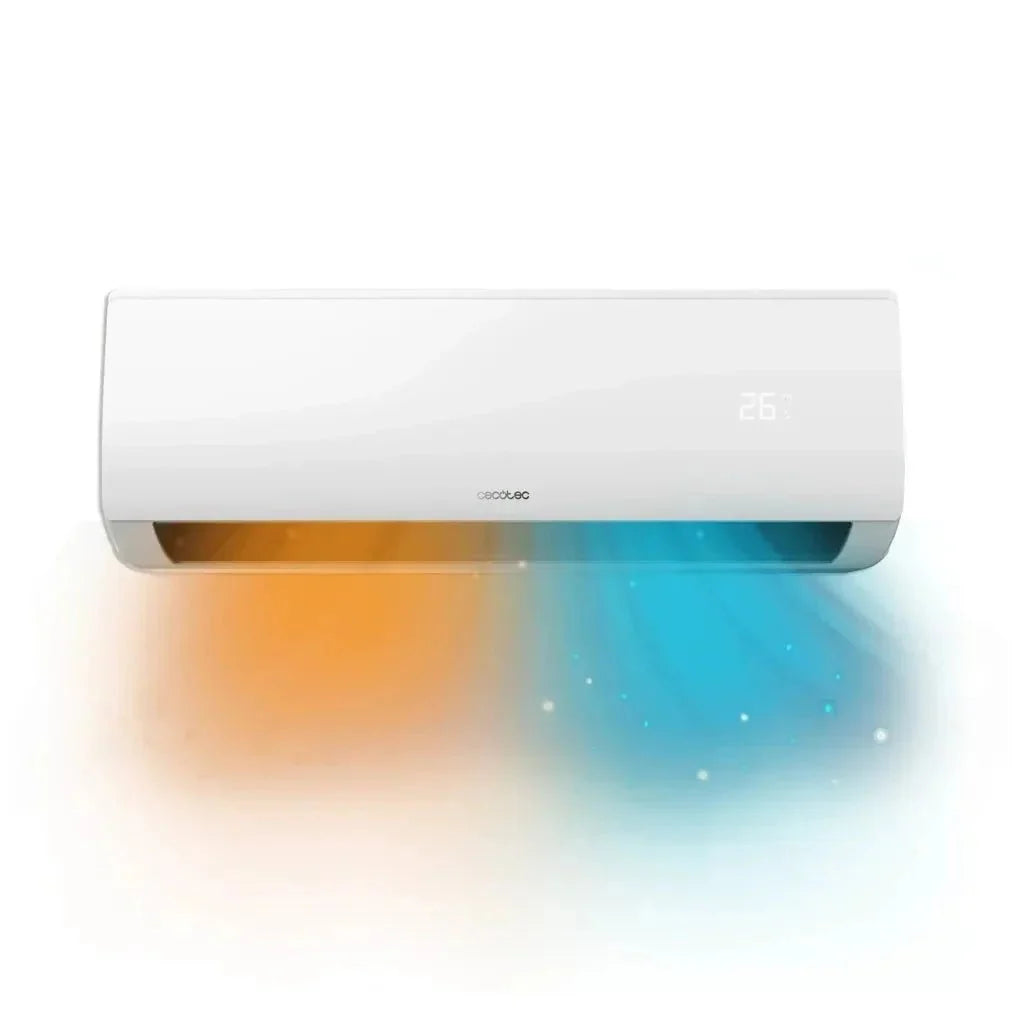
These Cecotec split units from our catalogue are on sale these days. They serve as a reference for power and price in each frigoría bracket:
| Product | Black Friday price | RRP | Discount |
|---|---|---|---|
| AirClima Smartfresh (from 9,000 BTU) | from 324,06 € | 411,25 € | −21% |
| AirClima 12000 Inverter with Wifi | 353,62 € | 448,75 € | −21% |
| AirClima 18000 Smartfresh (heat pump) | 609,72 € | 773,75 € | −21% |
| AirClima 24000 Smartfresh (heat pump) | 787,01 € | 998,75 € | −21% |
For a bedroom or a small office, the AirClima 12000 Inverter easily covers the most common 25-30 m²; if your living room is large or you want to cool an open-plan space, the AirClima 24000 with heat pump gives plenty of headroom. See all the deals.
Prices and availability as of the publication date; they may change.
What frigorías are (and why they are not the same as BTU)
The frigoría is the unit used to measure cooling capacity: one frigoría/hour is equal to removing 1 kilocalorie of heat from a room in one hour. It is essentially a calorie "in reverse". When a manufacturer says a unit delivers 3,000 frigorías, it is stating how much heat it can remove from the room per hour.
The problem is that technical sheets usually express power in BTU (British Thermal Units), the Anglo-Saxon unit. The conversion is simple: 1 BTU/h = 0.252 frigorías/hour. That is why the 12,000 BTU of a mid-range split translate into about 3,000 frigorías, and the 24,000 BTU of a large unit into about 6,000. Knowing how to move from one unit to the other is what lets you compare models even when each brand uses a different scale.

The basic rule: frigorías per square metre
The universal starting point is simple: around 100 frigorías/hour for each square metre to be cooled in an average home with normal ceiling heights (2.5 m). So a 15 m² bedroom needs about 1,500 frigorías, and a 30 m² living room, around 3,000.
That figure is a midpoint. In a well-insulated, modern, shaded flat you can drop to 70-80 frigorías/m²; in a top-floor flat with lots of sun, large windows or poor orientation it is worth rising to 120 or even 150 frigorías/m². The exact calculation is done by an installer with the real thermal load, but the square-metre rule gets you one step from hitting the mark.
Table of frigorías and power by surface area
This table translates surface area into frigorías and the split unit that matches it, using the average rule of 100 frigorías/m²:
| Surface area | Approx. frigorías | Power (BTU) | Type of room |
|---|---|---|---|
| Up to 20 m² | 1,500 - 2,200 | 9,000 BTU | Bedroom, office |
| 20 - 30 m² | 2,200 - 3,000 | 12,000 BTU | Small living room, studio |
| 30 - 45 m² | 3,000 - 4,500 | 18,000 BTU | Large living room, open kitchen-lounge |
| 45 - 60 m² | 4,500 - 6,000 | 24,000 BTU | Open-plan space, shop |
If your room falls right on the border between two brackets, choose the larger one: a slight excess of power is preferable, especially if the unit is inverter and modulates, to falling short in the middle of a heatwave.
Factors that change the calculation
The square-metre rule is the skeleton; these factors are what fine-tune the final number:
- Orientation and sun: a room facing south or west, with afternoon sun, may need up to 20-30 % more frigorías than one facing north.
- Insulation and windows: double glazing and good insulation reduce demand; old windows or large glass surfaces send it up.
- Ceiling height: the rule assumes 2.5 m. With high ceilings you have to calculate by volume (m³), not just by surface area.
- Occupancy and appliances: every person and every device (computers, cooking, televisions) adds heat. A kitchen or a busy room needs more power.
- Floor and top level: a top-floor flat takes more thermal load through the roof; it is worth raising the calculation.

How to calculate frigorías step by step
- Measure the surface area. Multiply the length by the width of the room to get the square metres.
- Apply the base rule. Multiply the square metres by 100 frigorías. A 28 m² living room gives 2,800 frigorías to start with.
- Correct for factors. Add 20-30 % if there is lots of sun, poor orientation, high ceilings or it is a top floor; subtract 10-20 % if insulation is excellent.
- Convert to BTU. Divide the frigorías by 0.252 (or multiply them by 4) to get the BTU and find the model. 2,800-3,400 frigorías match a 12,000 BTU unit.
- Choose with margin. When in doubt between two power ratings, go with the higher one, especially on inverter units.
Monosplit or multisplit: how to share out the power
If you are only going to cool one room, a monosplit (one outdoor unit and one indoor unit) is the most efficient and economical option. When you want to cool two or more rooms, the multisplit connects several indoor units to a single outdoor unit, which saves space on the façade. In that case you do not simply add up the frigorías: each indoor unit is sized for its room and the outdoor unit must cover the expected simultaneous use. A unit like the 27,000 BTU multisplit in the catalogue is designed precisely to share power across several rooms without crowding the façade.
Energy efficiency: SEER, SCOP and real consumption
Two units with the same frigorías can use very different amounts of energy. The key is the SEER (seasonal cooling efficiency) and the SCOP (heating): the higher they are, the less electricity they use to deliver the same cooling. A good class A or higher inverter adjusts its power continuously, avoids abrupt start-ups and cuts the bill compared with old on-off units. If you want to understand the rating well, our guide on how to read the energy label will help, and to review types of units and installation, the one on air conditioning: types, frigorías and installation.
Common mistakes when sizing air conditioning
The most common slip is falling short to save money: the unit works at full power all the time, never reaches the temperature on the hardest days and wears out sooner. The opposite, oversizing, also takes its toll: the unit cools very fast, switches off, starts again and, with those short cycles, dehumidifies badly and loses efficiency. Other common oversights are ignoring orientation, forgetting that a top floor needs more power and not checking the SEER. Measuring properly and applying the rule sensibly avoids all three in one go.
Frequently asked questions
How many frigorías do I need per square metre?
As a reference, around 100 frigorías/hour per square metre in an average home. Drop to 70-80 if insulation is very good and rise to 120-150 in rooms with lots of sun, large windows or poor orientation.
How many frigorías are 12,000 BTU?
About 3,000 frigorías/hour, applying the conversion 1 BTU/h = 0.252 frigorías. It is the typical power for living rooms or studios of 25 to 30 m².
Is it bad to fit an air conditioner with more frigorías than needed?
Oversizing makes the unit cool very fast and switch off in short cycles: it dehumidifies worse, creates a cold-damp sensation and uses more than expected. A slight margin is fine; a large excess is not.
What happens if I fall short of frigorías?
The air conditioner runs at 100 % continuously, fails to bring down the temperature on the hottest days, uses a lot of power and shortens its lifespan. A small excess of power is always preferable to falling short.
Article written by the Merkimarket editorial team. Power (BTU), frigoría and consumption data taken from the listings in the Merkimarket split air conditioner catalogue. The frigorías-per-square-metre equivalences are indicative; the exact calculation depends on the real thermal load of each room. Prices and availability may change; check each listing for the current information in Spain.