

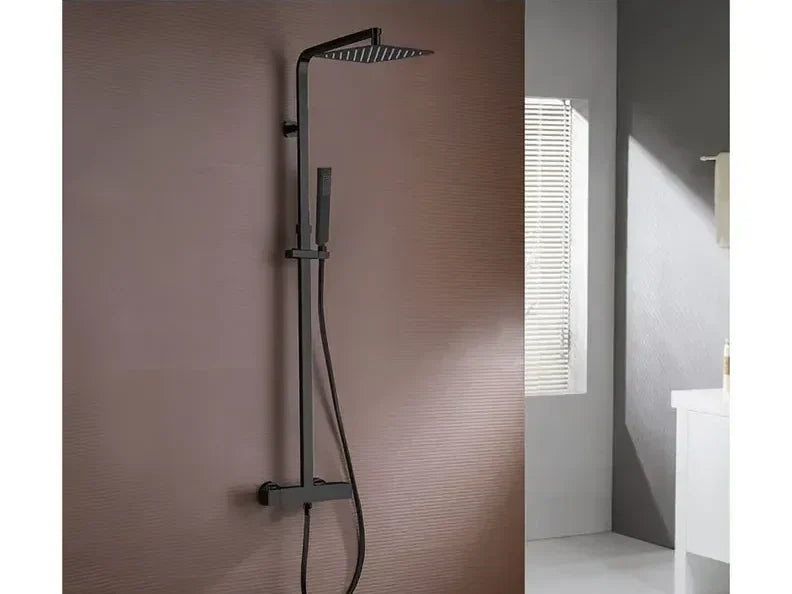
A shower column is a vertical shower assembly that integrates the overhead rain showerhead, the faucet, and a handheld shower with a flexible hose into a single piece. Some models also include hydromassage jets. It is installed over the wall water inlet and replaces the traditional faucet and riser rail.
Changing your old faucet for a shower column is one of the home renovations that makes the biggest impact with minimal construction. It improves the showering experience, updates the bathroom's aesthetic, and, depending on the model, adds features like hydromassage or constant temperature control. The key lies in choosing the right mechanism and dimensions. In this guide, we review the types, materials, and how to make the right choice, using data taken from actual product sheets in the Merkimarket shower column collection.
Key facts about shower columns
- What it is: A vertical assembly with an overhead showerhead, faucet, handheld shower, and flexible hose, mounted over the wall water inlet.
- Mechanism types: Single-lever, thermostatic, and hydromassage (jets), which are not mutually exclusive.
- Common materials: Brass for high-end faucets and stainless steel for the body and hose, both resistant to constant humidity.
- Finishes: Chrome, matte black, titanium, and white are among the most frequent.
- Showerhead: Overhead rain-type (ultra-thin 250 mm in several models) plus a handheld shower.
- Installation height: The wall water inlet is usually located 1.10–1.20 m from the shower tray; many riser rails are adjustable or telescopic.
- Warranty: The legal minimum of three years for consumers in Spain, plus the seller's commercial warranty.
With this general overview, you are now ready to get started; below, we expand on each decision so you can choose wisely.
Types of shower columns by mechanism
The first and most important decision is the mechanism that regulates the water. Comfort, safety, and price all depend on it.
Single-lever column. Regulates flow and temperature with a single handle, just like a conventional single-lever faucet. It is the simplest and most budget-friendly option and usually includes a diverter (often 3-way) to distribute water between the overhead showerhead, the handheld shower, and, if present, the jets. A good example is the Gocta single-lever column by GME, made of stainless steel, with a 3-way faucet and Sedal cartridge.
Thermostatic column. Incorporates a thermostatic cartridge (in the GME range, featuring a Vernet sensor) that memorizes and maintains the selected temperature even if the water pressure in the house fluctuates. It offers two clear advantages: it prevents cold or hot water shocks and improves safety, especially with children. Models like the Quadra Élite thermostatic column, made of brass with a matte black finish, are representative of this category.
Hydromassage column. Adds to the above a series of jets integrated into the vertical body that spray water toward the back for a massage effect. It turns your shower into a mini spa experience. The Gocta column with 2 hydromassage jets, in a black finish, is an example of this range.

Shower column comparison table
To see it at a glance, here is how the three types perform and where each one fits best:
| Type | How it works | Where it fits | Things to consider |
|---|---|---|---|
| Single-lever | A handle regulates flow and temperature; diverter to distribute water | Bathrooms looking for simplicity and good value | Temperature must be readjusted if pressure changes |
| Thermostatic | Thermostatic cartridge keeps set temperature constant | Families, homes with children, those seeking comfort and safety | Higher price; it is advisable to set the safety limit |
| Hydromassage | Adds adjustable jets to the body for a back massage | Those who want a home spa experience | Requires good water pressure for all jets |
Materials and finishes: brass, stainless steel, and colors
What separates a column that lasts from one that deteriorates quickly isn't in the photo, but in the material. In high-end faucets, brass reigns supreme, valued for its corrosion resistance and weight; for the vertical body, hose, and showerhead, stainless steel is very common, being ideal for the permanent humidity of a shower. Be wary of excessively light columns: they often reveal plastic where there should be metal.
In terms of finishes, current offerings go far beyond classic chrome. Matte black is trendy and pairs well with contemporary bathrooms; titanium provides a warm and elegant tone; and white fits into bright, Nordic environments. A practical tip: choose the column's finish to match the rest of the bathroom fixtures (sink and bidet) so the ensemble looks curated. The Round Élite model in titanium color, with a 250 mm ultra-thin showerhead and telescopic riser rail, is a good example of a finish other than the standard chrome.

How to measure and install a shower column
Before buying, measure. Two pieces of data dictate everything else: the height of the water inlet on the wall and the clearance height available above it up to the ceiling or the edge of the shower screen.
A shower water inlet is usually located about 1.10–1.20 m from the tray. Most columns connect to this outlet via a rigid or telescopic riser rail that absorbs minor differences; that is why many models indicate an adjustable height range—for example, telescopic rails that adjust between 87 and 118 cm—instead of a fixed measurement. Also, check that with the overhead showerhead attached, there is plenty of height for a tall person to shower comfortably: the rain showerhead should fall above the head.
The installation itself is manageable during a renovation, but it is best to proceed in an orderly fashion:
- Turn off the water and remove the old faucet or rail.
- Check the distance between inlets (the standard separation between the two water outlets is 15 cm) and ensure it matches the chosen column.
- Install the eccentrics and seal the threads with Teflon tape to prevent leaks.
- Assemble the column body and adjust the rail to the appropriate height, leveling it carefully.
- Connect the flexible hose and the handheld shower and tighten all joints well.
- Turn on the water and test each function (showerhead, handheld shower, and jets) for a few minutes, checking for any drips.
How to choose your shower column in 5 steps
- Decide on the mechanism. If you value safety and comfort, go for thermostatic; if you are looking for the essentials at a good price, choose single-lever; if you want a spa experience, opt for hydromassage.
- Measure your shower. Confirm the height of the water inlet (1.10–1.20 m is standard) and the overhead clearance; choose an adjustable or telescopic rail if you have any doubts.
- Choose material and finish. Prioritize brass and stainless steel, and pick a color (chrome, matte black, titanium, white) that matches the rest of the bathroom.
- Check the showerhead and hose. A large overhead showerhead (around 250 mm) provides a rain-like sensation; the anti-twist hose prevents tangles.
- Check pressure and warranty. If you go for hydromassage, make sure you have good water pressure, and save the model reference for spare parts and warranty.

Regulations and warranty: what is covered
When buying a shower column in Spain, it is important to keep the legal warranty in mind: for products purchased by consumers, the law recognizes a minimum of three years for lack of conformity, to which each seller can add their own commercial warranty and spare parts service. It is worth noting the model reference (e.g., the series name and finish): this is what you will need to order a replacement hose, handheld shower, or cartridge years later to extend the set's service life.
Frequently asked questions about shower columns
Which is better, a single-lever or a thermostatic column?
It depends on the usage. The thermostatic version maintains a constant temperature and is safer and more comfortable, especially with children or if your home's water pressure varies. The single-lever version is simpler and more affordable, and works perfectly if you don't require a fixed temperature.
At what height is a shower column installed?
The wall water inlet is usually 1.10–1.20 m from the tray, with a standard separation of 15 cm between the two outlets. Many columns have an adjustable or telescopic rail to adapt to minor height differences.
Do I need a lot of water pressure for hydromassage?
Hydromassage jets distribute water among several points, so proper water pressure is recommended so that all the jets function with force at the same time. With low pressure, a thermostatic or single-lever column without jets performs better.
What material should it be made of?
The ideal is brass for the faucet and stainless steel for the body and hose, materials that withstand humidity and corrosion well. Be wary of very light columns, which often hide plastic in parts that should be metal.
Ready to renovate your shower? Explore all models in the Merkimarket shower column collection or check out two references directly to get an idea of finishes and features: the matte black Quadra Élite thermostatic model and the stainless steel Niagara single-lever model. And if you are renovating the entire bathroom, our guides on bathroom faucets and shower screens will help you.
Article written by the Merkimarket editorial team. Technical data taken from the Merkimarket shower column collection product sheets. Measurements and availability may vary; consult each product sheet for current information in Spain.





