Pool maintenance rests on three pillars: filtration (a pump and a filter that circulate and clean the water), cleaning the pool shell with a pool cleaner —manual or an automatic robot that removes dirt from the floor and walls— and the chemical balance of the water (pH, chlorine and alkalinity). Looking after all three regularly keeps the water healthy, clear and ready to swim in.
A pool does not get dirty all at once: it happens little by little, with leaves, pollen, sun cream, sweat and the heat that encourages algae. That is why maintenance is not about major cleaning operations, but about a constant, simple routine. In this guide we explain how each part of the system works, what kind of pool cleaner suits your pool and how to keep the water balanced throughout the season, with real data and products from the Merkimarket catalogue.
Key facts about pool maintenance
- The three pillars: filtration (pump + filter), mechanical cleaning of the shell (pool cleaner) and chemical treatment of the water.
- Filtering hours: as a practical reference, the total volume of water is usually circulated at least once or twice a day; in summer, more hours.
- Ideal pH: between 7.2 and 7.6, the range in which chlorine disinfects best and the water does not irritate.
- Free chlorine: usually between 1 and 2 ppm in a domestic pool.
- Pool cleaner: manual (connected to the skimmer), automatic hydraulic or autonomous electric robots that clean the floor and walls effortlessly.
- Wintering: when closing the season it is advisable to balance the water, lower the level and protect the filter unit against frost.
With these references you already have the map; below we develop each point so that maintenance takes you minutes and not a whole weekend.
Black Friday deals on pool maintenance
Now is the time to get a pool cleaner robot: these catalogue models are genuinely reduced during the Black Friday campaign. We have checked the current price against the RRP so you can see the real discount on each one.
| Product | Black Friday price | RRP | Discount |
|---|---|---|---|
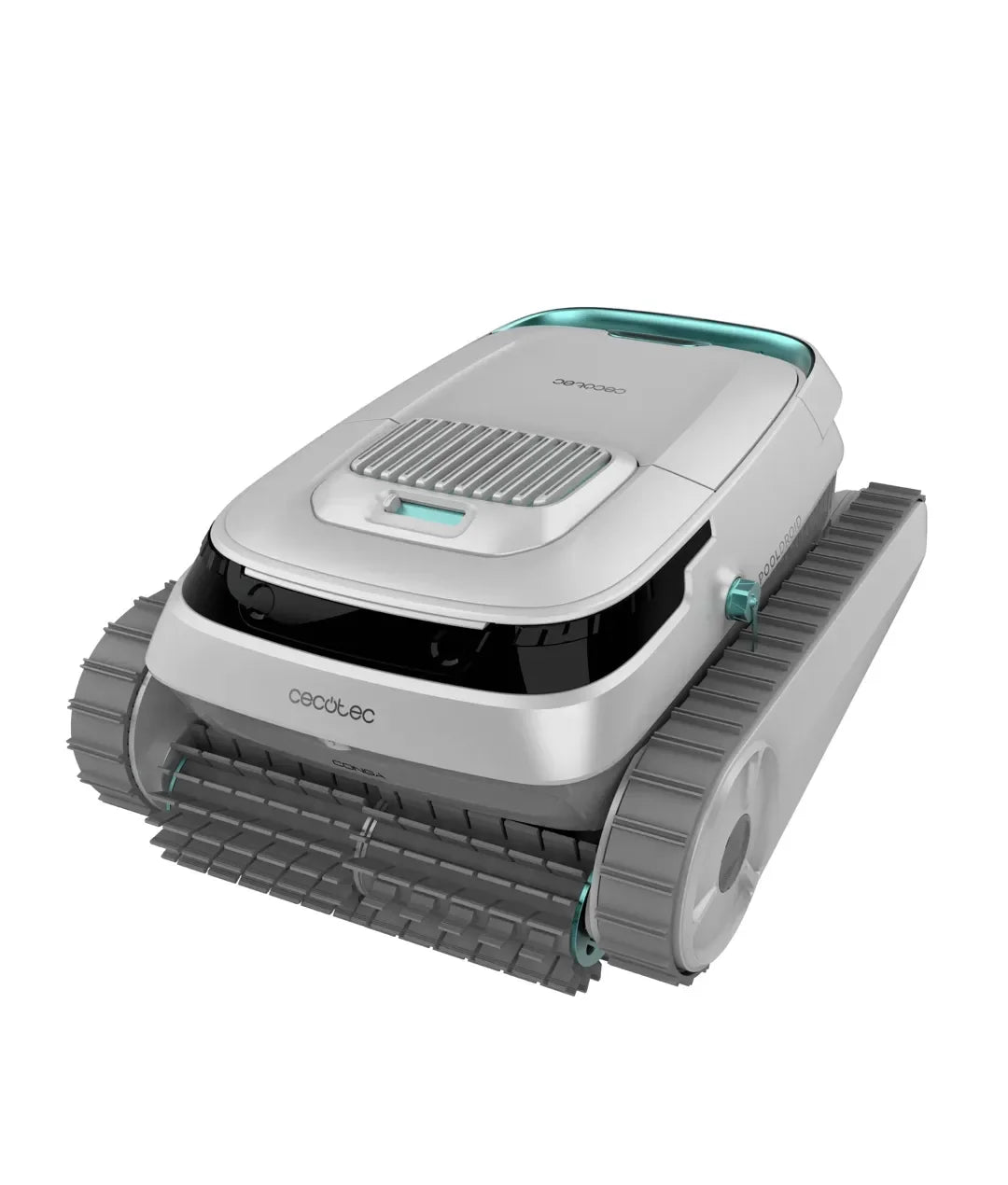
| Conga Pooldroid 5000 pool cleaner robot (floor and walls, 120 min) Cecotec | 359,00 € | 448,75 € | −20% |
| Conga Pooldroid AquaSkater surface robot Cecotec | 205,87 € | 261,25 € | −21% |
| Cordless pool cleaner robot (100 min autonomy) Cecotec | 199,00 € | 240,79 € | −17% |
| Conga Pooldroid 2000 pool cleaner robot (up to 80 m²) Cecotec | 119,00 € | 148,75 € | −20% |
If your pool is medium or large and you want to forget about cleaning, the Conga Pooldroid 5000 works the floor and walls with 120 minutes of autonomy; for pools of up to 80 m², the Conga Pooldroid 2000 is the most budget-friendly option. See all the deals on pool cleaners.
Prices and availability as of the publication date; they may vary.
The filtration system: how the water circulates and is cleaned
The water in a pool is constantly moving, even if we do not see it. The pump draws the water in through the skimmers and the bottom drain, pushes it through the filter (usually sand, glass or cartridge) and returns it clean through the inlet nozzles. That closed circuit is what stops the water from stagnating and turning green. Without filtering, no chemical keeps the pool in check.
The practical rule is simple: you must filter for enough hours so that the whole volume of water passes through the filter at least once or twice a day. In the height of the hot season, with heavy use, it is advisable to increase those hours; in spring and autumn they can be reduced. A timer or a pump with a time control saves you from having to remember every day.
The filter unit and the pump: the heart of the pool
The filter unit is the equipment that integrates the pump and the filter. Its maintenance is what prevents the most breakdowns and most extends the life of the installation. There are three gestures that make the difference:
- Empty the pump pre-filter: the basket that retains leaves and hair is checked once a week. A full pre-filter makes the motor work harder.
- Wash the filter (backwash): in sand or glass filters, when the gauge pressure rises you do a counter-current wash to drag out the dirt. In cartridge filters, it is removed and rinsed.
- Watch the pressure: the pressure gauge is the system's informer. High pressure indicates a dirty filter; low pressure, a possible blockage in the suction.
If you notice that the water takes a long time to clear despite filtering many hours, the problem is almost always in the filter, not in the chlorine. The pump's electricity consumption is also a significant part of the cost of the pool: understanding how the spending is measured helps, which is why you may find our guide on how to read the energy label and how much you really save useful.

Pool cleaners: manual, automatic or robot
The filter unit cleans the water, but it does not pick up the dirt that settles on the floor and walls. That is the job of the pool cleaner, and this is where the market has changed most. There are three main families:
| Type | How it works | Ideal for | Effort |
|---|---|---|---|
| Manual | A brush on a pole connected to the filter unit by a hose; you move it yourself | Small pools and occasional touch-ups | High |
| Automatic hydraulic | Moves on its own using the pump's suction | Those who already have a filter unit with enough power | Medium |
| Electric robot | Autonomous, with its own motor and filter; cleans floor, walls and water line | Medium and large pools, maximum convenience | Minimal |
The electric robot has become the most popular option because it works independently of the filter unit: you drop it in the water, it goes over the shell with a sweeping pattern and filters the dirt into its own basket. Cordless models also do away with cables floating in the water. In the catalogue you will find everything from compact units such as the Conga Pooldroid 2000, for pools of up to 80 m², to robots that climb walls and clean the waterline. You can compare them all in the pool cleaners collection.

Water balance: pH, chlorine and alkalinity
The third pillar is chemical treatment, and it is best understood in order, because one parameter depends on the other. First you adjust the pH, which should stay between 7.2 and 7.6: with the pH out of control, the chlorine loses effectiveness no matter how much you add. Then you control the free chlorine, the disinfectant that eliminates bacteria and algae, at around 1-2 ppm in domestic use. And in the background is total alkalinity, which acts as a buffer and stops the pH from swinging from one day to the next.
Measuring is essential: with a strip kit or a digital meter you check pH and chlorine a couple of times a week in season. If the water stings the eyes or smells strongly of chlorine, there is almost never too much chlorine: it is usually a badly adjusted pH or chloramines that are corrected with a shock chlorination. Always add the products with the filter unit running and dissolved, never directly into the pool.
Maintenance calendar: the routine that works
- Every day (in season): filter the necessary hours and remove leaves from the surface with the leaf skimmer.
- Every week: measure pH and chlorine, run the pool cleaner, empty the skimmer baskets and the pump pre-filter, and brush the walls and waterline.
- Every fortnight: check the filter pressure and backwash if necessary; check the alkalinity.
- Every season: deep cleaning of the filter, inspection of the seals and, at closing, full wintering.
The important thing is not to do a lot, but to do it regularly: a pool looked after every week is hardly any work, while one abandoned for two weeks in the middle of August can take days to recover.
Wintering: how to close the pool without surprises
When the swimming season ends, wintering protects the installation during the cold months. The basic steps are to balance the water well and do a shock chlorination, lower the level below the skimmers, add a wintering product that holds back algae and scale, and protect the filter unit and the pipes against possible frost (draining or purging depending on the area). A winter cover stops leaves from falling in and greatly reduces the reopening work in spring. As with other seasonal household equipment —such as air conditioning maintenance—, an inspection before storing for the season avoids surprises. A good wintering is the difference between opening the pool in May with the water almost ready or having to empty it completely.
Common mistakes that cost dearly
- Filtering few hours to save money: it is a false saving; the water goes cloudy and you end up spending more on chemicals.
- Adding chlorine without checking the pH: with a high pH, much of the chlorine does not disinfect.
- Forgetting the pre-filter and the gauge: they are the system's two informers and warn you before there is a breakdown.
- Using the pool cleaner as the only system: it picks up dirt from the shell, but it does not replace filtration or water treatment.
Frequently asked questions about pool maintenance
What pool cleaner is best for my pool?
For small pools or occasional touch-ups, a manual pool cleaner does the job. If you want convenience and have a medium or large pool, an autonomous electric robot is the best option: it cleans the floor and walls without depending on the pump's power. Choose the model according to the square metres and the depth of your pool.
How many hours a day should the filter pump run?
The practical reference is to filter for enough hours so that the whole volume of water passes through the filter once or twice a day. In summer and with heavy use you increase the hours; in spring and autumn you reduce them. A time switch makes keeping the routine easy.
What should the water pH be?
The ideal pH is between 7.2 and 7.6. In that range the chlorine disinfects effectively and the water does not irritate the skin or eyes. It is best to adjust it before correcting the chlorine.
How often should I run the pool cleaner?
As a rule, once a week during the swimming season, and more often if there are trees nearby or after a storm. Running the pool cleaner regularly stops the dirt from compacting on the floor and makes the filter pump's job easier.
Article written by the Merkimarket editorial team. Technical data and products taken from the real catalogue sheets of Merkimarket's pool section. Prices and availability may vary; check each sheet for the current information in Spain.