

The energy label is the official European Union sheet that classifies each appliance on an efficiency scale from A (most efficient) to G (least efficient), and provides information on energy consumption in kWh, noise, and other verifiable data. Since March 2021, it has used a renewed scale, without the old "A+++" ratings.
When you compare two appliances, the price on the store tag doesn't tell the whole story: what really makes the difference over the years is what each device consumes. That information is, in a summarized and comparable format, on the energy label. Learning to read it in thirty seconds is the best tool to avoid mistakes when choosing a washing machine, a refrigerator, or a dishwasher. In this guide, we explain what each piece of data means, how it translates into euros, and what to look for in the actual product sheets of the Merkimarket appliance catalog.
Key data on the energy label
- What it is: A mandatory EU label that classifies a product's energy efficiency and shows its consumption.
- Current scale: From A (most efficient) to G (least efficient), in effect since March 2021.
- Consumption: Expressed in kWh—per year for cooling appliances, per 100 cycles for washing appliances—to allow for model comparison.
- QR code: Links to the official European EPREL database, where the verified data for the model can be found.
- Other data: Noise in decibels and its class (A–D), capacity, water consumption, and eco programs.
- Current common classes: Very few appliances reach A; for cooling, it is normal to see classes D and E in models with a good price-to-quality ratio.
- Warranty: A legal minimum of three years for consumers in Spain, in addition to the manufacturer's warranty.
With this, you can now decipher any label; we develop this point by point below.
What the energy label is and why it changed in 2021
The energy label was created so that any buyer could compare the costs of two appliances without being an engineer. For years, it used a scale that started at A and grew upward with the famous A+, A++, and A+++, because technology improved so much that almost everything ended up at the top and it became difficult to distinguish between models. To fix this, in March 2021, the European Union re-scaled the label for several product families—refrigerators, freezers, washing machines, dishwashers, and screens—to a clean A to G scale, which is more demanding.
The practical effect is that a fridge that previously showed an "A++" rating shifted to a D or an E without having changed internally. It is not that the appliance consumes more: it is that the measuring stick became stricter, leaving room (the A class) for technologies yet to come. That is why today it is perfectly normal to find good appliances in intermediate classes.
How to read the label step by step
The label looks busy, but it is always read in the same order. These are the steps:
- Look at the letter and its color. This is the efficiency class, from A (green) to G (red). The black arrow indicates which rung the model you are looking at is on.
- Read the consumption in kWh. It is the large number below the scale. For cooling, it is given per year; for washing, per 100 cycles of the eco program. This is the figure you can convert into euros.
- Check the bottom pictograms. Depending on the appliance, you will see capacity in liters or kilograms, liters of water per cycle, program duration, and spin-dry class.
- Note the noise level. It appears in decibels (dB) alongside its class (from A to D). This matters a lot for open-plan kitchens and small apartments.
- Scan the QR code. It takes you to the official model sheet in the European EPREL database, with the data registered by the manufacturer.

What each class from A to G means
The scale summarizes the appliance's energy performance in a single letter. This is a quick read for each rung:
| Class | Color | Meaning | Where you find it today |
|---|---|---|---|
| A | Green | Maximum efficiency; very low consumption | Reserved for the cutting edge; still scarce |
| B | Light green | High efficiency | High-end washing and dishwashing appliances |
| C | Greenish-yellow | Good efficiency | Balanced washing machines and dishwashers |
| D | Yellow | Medium efficiency, contained consumption | Combi refrigerators with good price-value |
| E | Orange | Medium-low efficiency | Accessible refrigerators and freezers |
| F | Dark orange | Low efficiency | Basic entry-level models |
| G | Red | Least efficient on the scale | Very basic or old product |
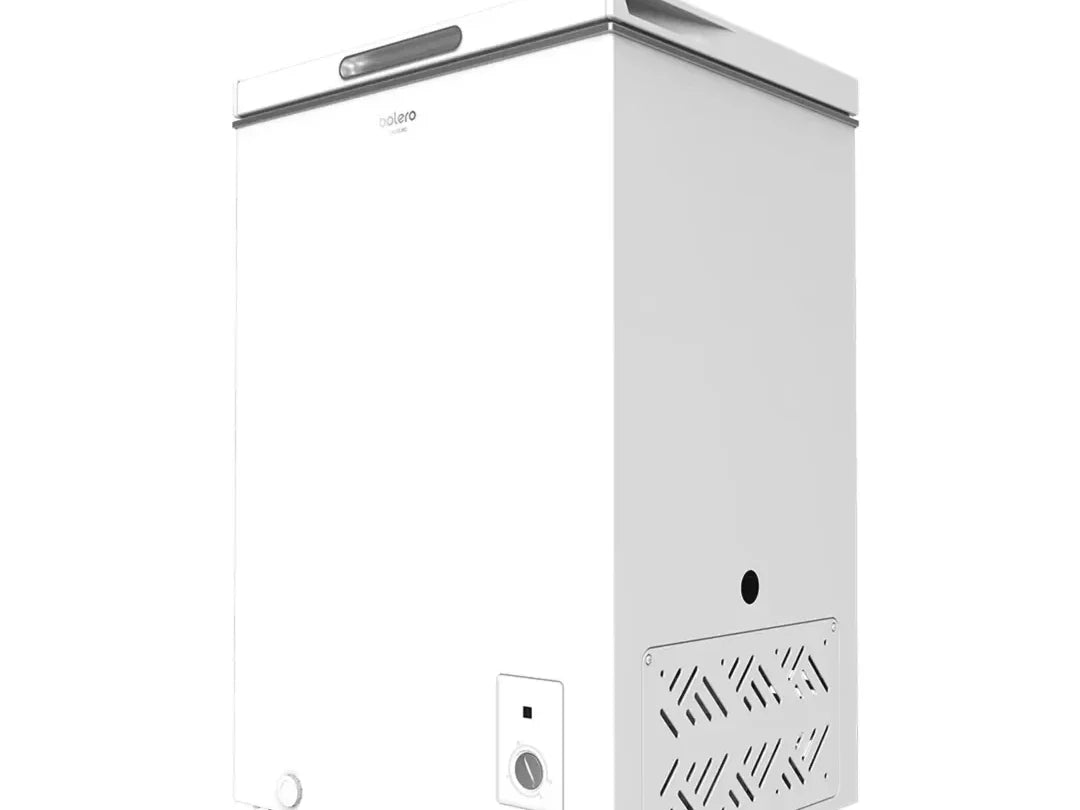
In the catalog, you will see this logic in real products: a 250-liter combi refrigerator with inverter technology is classified as class D, while a 99-liter horizontal freezer appears as class E. These are intermediate classes that are perfectly normal today for cooling, where reaching A or B still drives up the price.
From class to euros: how much you really save
Here is the question that matters. The consumption in kWh from the label is converted into money with a simple calculation: multiply the annual kWh by the price you pay per kWh on your bill. If a refrigerator declares, for example, 180 kWh per year and your rate is around €0.15/kWh, that appliance costs you about €27 per year in electricity; another one that consumes 260 kWh will cost you nearly €39. The difference is about €12 per year.
It seems like little, but a refrigerator runs 24 hours a day for 10 or 15 years. Those €12 per year become €120–€180 over its useful life, and in high-use appliances, the gap between one class and another can be greater. The rule of thumb: for appliances that are always plugged in (cooling) or that you use daily, moving up a class usually pays off even if the purchase price is slightly higher; for appliances used sporadically, the savings take much longer to be noticed.
Watch out for an important nuance in washing: since 2021, the consumption of washing machines and dishwashers is expressed per 100 cycles of the eco program, not per year. To compare with your reality, calculate how many loads you do per week and project it. And use the eco program: it is longer, but it is exactly what the label measures and what uses the least.

The QR code and the EPREL database
Since the 2021 redesign, all labels include a QR code in the upper corner. It is not decorative: scanning it takes you to the model sheet in EPREL, the European product registry for energy labeling. There, the data that the manufacturer has declared and officially registered is displayed, allowing you to cross-check that what the box says matches what is registered with the European Union. It is the most reliable way to verify a model before buying it and to compare two appliances using the same criteria, without relying solely on the commercial brochure.
Beyond the letter: the data that usually decides the purchase
The class leads the way, but it is not the only useful thing on the label. It is worth looking at three more pieces of data:
Noise. It is indicated in decibels and with a class from A to D. In a refrigerator or a hood that shares space with the living room, the difference between 38 and 45 dB is very noticeable at night. It is a piece of data the label gives you for free that many buyers ignore.
Water. For washing machines and dishwashers, the label records water consumption per cycle. An appliance that is efficient in electricity but wasteful with water increases your bill in another way, so it is advisable to look at both figures together.
Actual capacity. Efficiency is measured in relation to size. A large refrigerator in class E can make sense for a large family, while for a single person, a smaller and better-classified appliance almost always pays off. Adjust the capacity to your usage before obsessing over the letter.
How to use the label to choose well in 4 steps
- Filter by size and type first. Decide on liters or kilograms based on your household; comparing classes between appliances of different sizes makes no sense.
- Compare the class within the same category. Between two similar combi refrigerators, a D versus an E is a fair comparison.
- Translate kWh to euros. Multiply by your electricity price and project it over the life of the appliance; that is where you will see if paying more upfront is worth it.
- Finish with noise and water. If the classes are equal, let this data and the features break the tie. Each product sheet details them.

Ready to apply this? Explore the Merkimarket appliance catalog and compare classes on actual products. If you are renovating your laundry area, our guide on how to choose a washing machine based on capacity, load, and consumption will help you; and if you are hesitant about the kitchen, the comparison between induction, ceramic, or gas cooktops also focuses on real costs.
Frequently asked questions about the energy label
Why is my new refrigerator class D or E if they used to be A++?
Because in March 2021, the European Union re-scaled the label to a more demanding A to G scale and eliminated the "A+" ratings. The appliance does not consume more: it is simply measured with a stricter yardstick, with A reserved for technologies yet to come.
How much can I save by moving up an energy class?
It depends on usage. In appliances that are always plugged in, like a refrigerator, the difference in consumption between adjacent classes can amount to between €100 and €200 over its useful life. Multiply the kWh from the label by your electricity price to calculate your specific case.
What is the label's QR code for?
It links to EPREL, the official European database, where the registered data for the model can be found. It allows you to verify and compare appliances with uniform criteria before buying.
Is the washing machine consumption per year or per wash?
Since 2021, it is indicated per 100 cycles of the eco program, not per year. To estimate your cost, calculate how many loads you do and project it; and use the eco program, which is what the label measures.
Article written by the Merkimarket editorial team. The information on the energy label's scale and operation corresponds to current European Union regulations; the mentioned classes are taken from real product sheets in the Merkimarket catalog. Consumption and savings depend on each model and your electricity rate; check the label of each product for the current information in Spain.





