When it's time to renovate or equip a kitchen, the faucet is often one of the last elements we think about. However, it is precisely the fitting we touch most often every day, the one that handles the most water, and the one that most influences comfort in daily work. Choosing the right kitchen faucet can make a huge difference in your daily experience, and a poor choice can lead to years of discomfort, frequent repairs, or technical incompatibilities that are difficult to resolve.
In this practical guide, we explain everything you need to know to make the best decision: the most popular types of faucets, which situations each works best in, what technical aspects you should not overlook, and how to identify a truly quality product from one that only appears to be so at first glance.
First: understand what type of installation you have
Before choosing any kitchen faucet, it is essential to check the existing installation in your sink. Sinks can have different hole configurations:
-
Single hole: the most common in modern kitchens, compatible with most single-lever faucets.
-
Three holes: common in older installations or in sinks designed for two-handle faucets with integrated water purifiers.
-
No holes: some countertop sinks allow for direct installation on the countertop, with the faucet mounted on marble or granite.
Knowing this initial information will save you unpleasant surprises during installation and allow you to rule out models that are not compatible with your sink beforehand. If you have doubts, consult the sink manual or measure the diameter of the existing hole.
1. Single-lever faucet: the most versatile and practical option
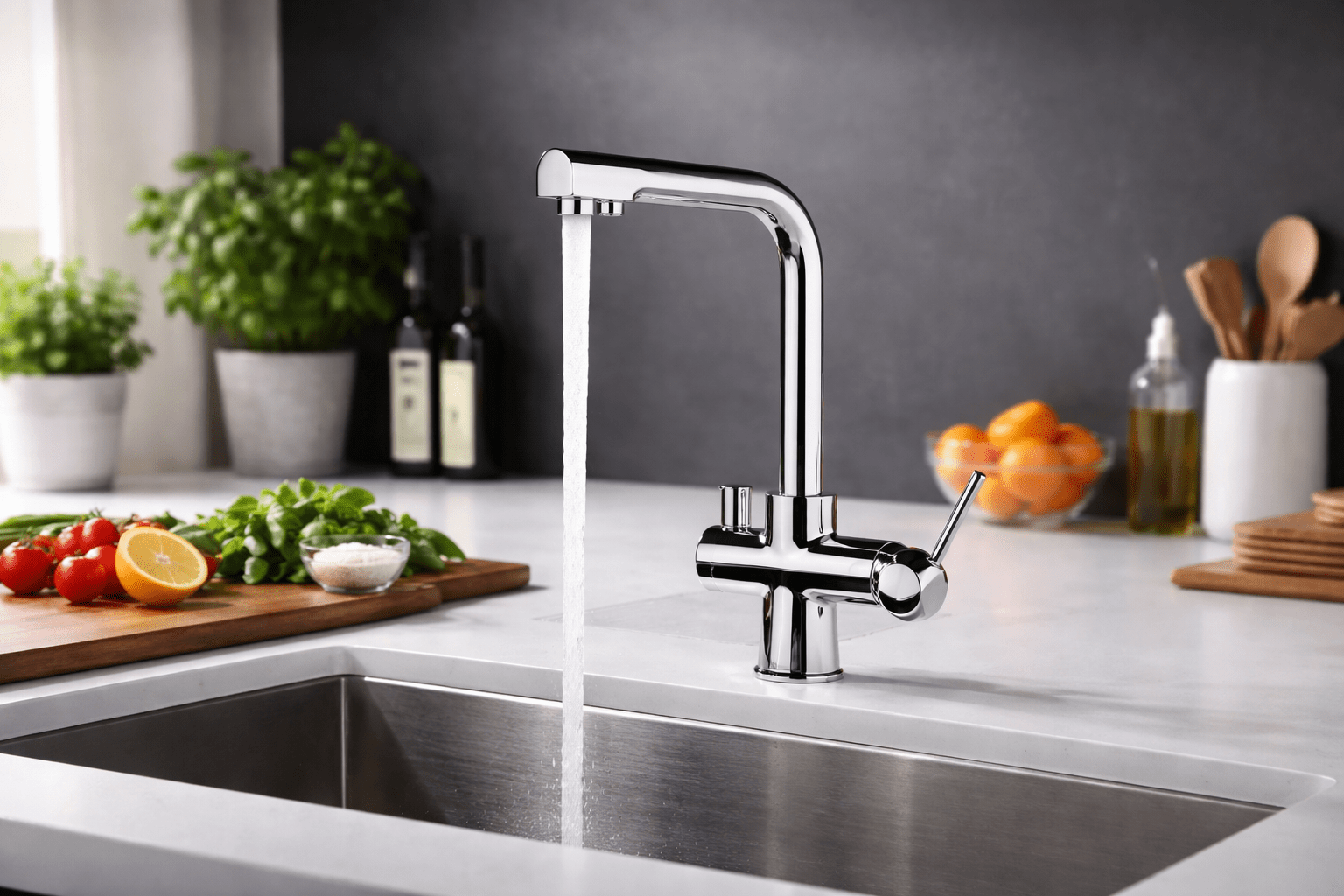
The single-lever faucet is currently the standard in most new and renovated kitchens, and there are very solid reasons for this. Its ceramic cartridge mechanism allows you to regulate both the water flow and temperature with a single lever movement, which greatly simplifies its daily use.
Main advantages:
-
One single movement to adjust temperature and flow: essential when your hands are dirty or wet while cooking.
-
Immediate response: you reach the exact temperature you need in seconds, without wasting water heating the circuit.
-
Simple maintenance: the ceramic cartridge is the key component and its replacement, when necessary, is quick and economical.
-
Clean design: with a single handle, the faucet has more modern and minimalist lines that fit into practically any current kitchen style.
-
Water efficiency: the central position of the handle automatically activates cold water; only when turning towards the hot side does the domestic hot water circuit open, which reduces energy consumption.
When to choose it? Whenever you are looking for practicality, contemporary design, and efficiency. It is the most recommended option for frequently and intensively used kitchens.
2. Two-handle faucet: classicism and differentiated control
The two-handle faucet features two independent handles—one for cold water and one for hot water—that allow each circuit to be regulated separately. While this system is less intuitive than the single-lever faucet for quicker daily tasks, it has solid arguments in its favor when the context requires it.
Why is it still relevant?
-
Unmistakable style: in a kitchen with a classic, English, French, or rustic inspiration, the two-handle faucet provides an aesthetic coherence that no single-lever can match. Models with an aged brass body, nickel finishes, or painted porcelain faucets are decorative pieces in their own right.
-
Mechanical durability: the quarter-turn ceramic disc shut-off mechanisms incorporated in the best two-handle faucets are extremely robust and have a lifespan of decades.
-
Compatible with three-hole sinks: if you have an old three-basin sink, the two-handle fits naturally without the need to adapt the installation.
Important consideration: since two separate controls need to be adjusted, mixing the temperature requires more time and can lead to higher water consumption if not managed carefully.
When to choose it? In classic, vintage, Provençal, or rustic style kitchens where aesthetics are as important as function. It is also a valid option if your installation already has three holes and you don't want to undertake construction work.
3. High-arc faucet: superior comfort and ergonomics
The high-arc faucet is characterized by its elevated neck, which generally exceeds 20 cm in height above the countertop. Far from being merely an aesthetic choice, this height has very practical implications for daily kitchen use.
Real benefits of the high-arc spout:
-
Expanded functional space: the greater free space under the spout makes it easier to wash large pots, pans, and trays without having to tilt the container to fit it.
-
Reduced physical effort: working without bending your back or adopting forced postures reduces fatigue during long cooking or cleaning tasks.
-
Outstanding visual impact: the high-arc faucet becomes the focal point of the sink area, providing presence and elegance. Models with cylindrical or arched necks are especially sought after in designer kitchens.
Technical aspects to consider:
Before installing a high-arc faucet, verify that there is sufficient space between the sink and the cabinet or shelf above. In kitchens with limited vertical space, an excessively high spout may get caught or hinder its movement. The spout height should allow at least 15-20 cm of clear space between the tip and any overhead obstruction.
When to choose it? In large kitchens, with medium-to-large single or double bowl sinks, and where ergonomic comfort is a priority. It is especially recommended in homes where a lot of cooking is done and with large containers.
4. Pull-down faucet: maximum functionality in the active kitchen
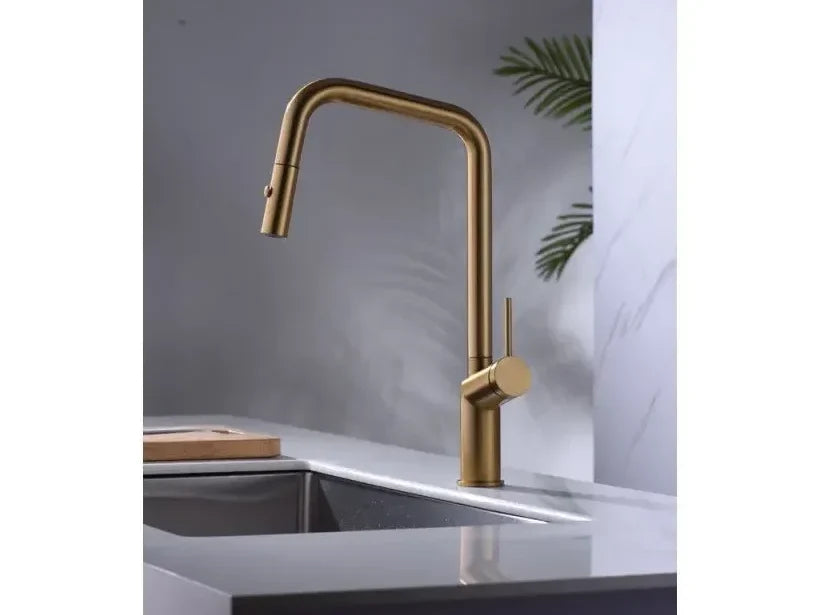
The pull-down faucet—also called pull-out or with a pull-down spray head—incorporates a spray head that can be detached from the spout and directed freely thanks to an internal flexible hose. This type of faucet has gained enormous popularity in recent years, and it's easy to see why.
What makes it different:
-
Total freedom of movement: you can direct the stream exactly where you need it, whether to clean the corners of the sink, rinse containers outside the sink, or fill a large pot that wouldn't fit under a fixed spout.
-
Dual spray function: most models allow switching between a concentrated stream (for filling containers) and a diffused spray (for rinsing food or cleaning surfaces), often with a single click.
-
More efficient cleaning: with the pull-down spout, cleaning the sink itself—including corners and sides—is much faster and more thorough.
What distinguishes a good pull-down faucet from a mediocre one?
The quality of the internal hose is the most critical factor. Low-quality silicone hoses tend to bend, twist, or lose flexibility over time. The best models incorporate braided stainless steel hoses with sliding guides that ensure smooth, tangle-free retraction for years. It is also important that the retention system (which causes the head to return to its position on its own) is robust.
When to choose it? In households with high kitchen activity, large families, or anyone who wants to simplify and speed up sink cleaning tasks.
5. Materials: the decision that determines durability
The material from which the faucet body is made is as important as its design. Here we explain the most common ones and what you should know about each:
Solid brass
Brass is the benchmark material for quality faucets. Its density, mechanical resistance, and excellent behavior against humidity and cleaning products make it the ideal basis for a durable faucet. Solid brass faucets tend to be heavier to the touch, reflecting the solidity of their construction.
A properly maintained solid brass faucet can easily last 15-20 years or more without needing replacement.
Stainless steel
Stainless steel stands out for its corrosion resistance, modern appearance, and superior hygienic behavior. It is the preferred material in high-use kitchens where cleanliness and durability are priorities. Food-grade (316L) stainless steel models are especially recommended, as they are designed for humid environments and exposure to detergents.
Zinc or zamak
Some economy-range faucets are made of zinc alloys (zamak). Although at first glance they may appear similar to brass, their resistance is notably inferior. They are more susceptible to internal corrosion, especially in areas with very hard water, and have a shorter lifespan. They are easily recognized by their significantly lighter weight.
Tip: if you are going to invest in a faucet that you want to last, always choose solid brass or stainless steel as the base material, regardless of the surface finish.
6. Finishes: beyond aesthetics
The surface finish of the faucet not only defines its appearance but also its resistance to wear, fingerprints, and cleaning products:
-
Polished chrome: the most classic and resistant finish. Easy to clean and very durable. Fits into any kitchen style.
-
Matte black: very trendy in modern and industrial kitchens. Provides sophistication but requires more maintenance, as water marks and fingerprints are more visible.
-
Brushed or satin steel: a warm and discreet finish that better hides everyday marks and combines very well with stainless steel appliances.
-
PVD gold or golden: for luxury kitchens or those with brass and bronze details. PVD (Physical Vapor Deposition) coating ensures much greater durability than traditional gold plating.
-
Matte white: ideal for Nordic or Scandinavian style kitchens. Combines perfectly with white or marble countertops.
7. Final criteria for making the best decision
To choose the kitchen faucet that best suits your needs, ask yourself these questions before buying:
1. How many holes does my sink have?
Determine which types of faucets are compatible without additional work.
2. How much vertical space is above the sink?
If it's limited, rule out very high-arc models or consider a foldable faucet.
3. How intensively is the kitchen used in my home?
The more it's used, the more important it is to opt for quality materials (brass or stainless steel) and durable mechanisms (ceramic cartridges).
4. What style is my kitchen?
Aesthetic consistency between the faucet, sink, appliances, and furniture is essential for a visually harmonious result.
5. Is water saving a priority?
Look for models with built-in aerators or flow restrictors that reduce consumption without sacrificing perceived pressure.
Conclusion: a good faucet is an investment, not an expense
A kitchen faucet is one of the few household items you literally use several times a day for years. Investing in a quality model—the right one for your installation, lifestyle, and kitchen design—is one of the purchase decisions with the highest real return in terms of comfort and durability.
At Merki Market, you will find a wide selection of kitchen faucets in all styles, materials, and functionalities, with options for every budget and need. Browse our collection and find the faucet that will transform your kitchen into a more comfortable, efficient, and beautiful space.
Before making a purchase, always check the faucet's compatibility with your sink and, if you have any doubts about the installation, consult a professional plumber to avoid setbacks.