

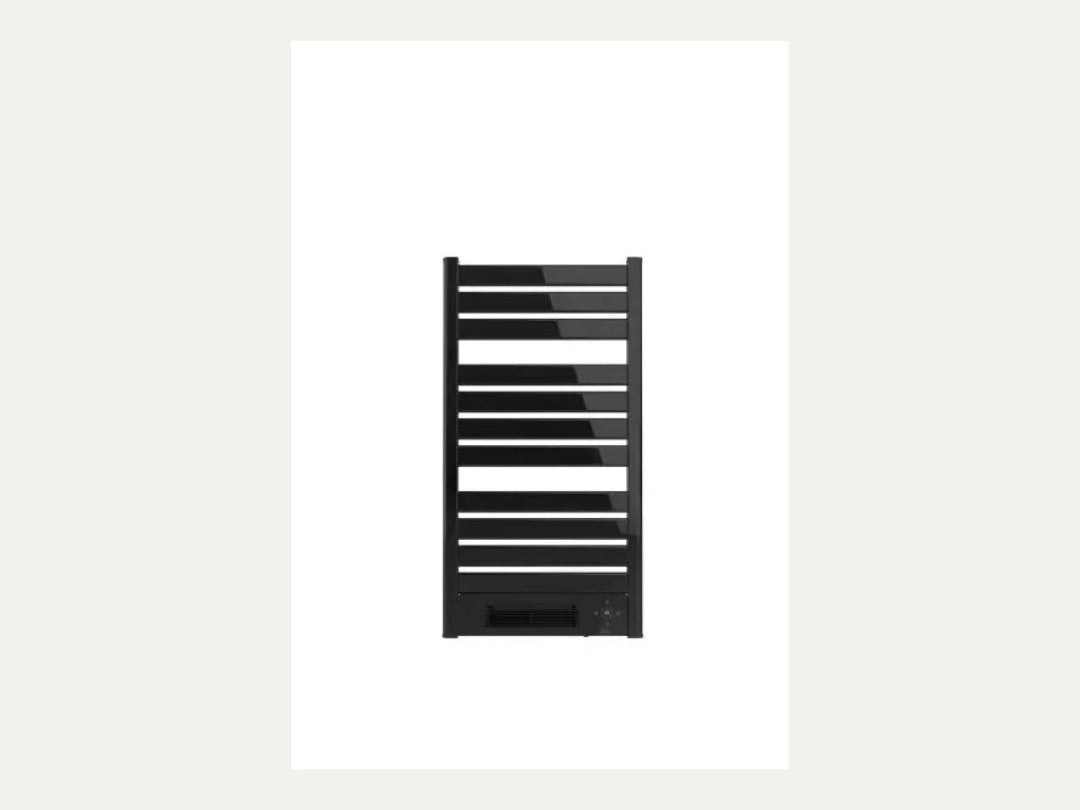
A heated towel rail is a heating radiator with horizontal bars designed to dry and warm towels while heating the bathroom. It comes in three systems: electric (with its own heating element and plug), water-based (connected to the central heating system), and dual (combines both; works with the boiler in winter and independently the rest of the year).
Key facts
- Electric: plugs into the mains, does not depend on the boiler, and can be installed in most bathrooms without construction work.
- Water-based: connects to the existing central heating system, with no separate electrical consumption.
- Dual: adds an electric heating element to the water circuit to allow it to be heated even when the boiler is off (e.g., in summer).
- Typical power for domestic models ranges from 300 to 2000 W depending on the size of the bathroom.
- Models with ceramic heaters or thermal fluid distribute heat differently: the ceramic one heats up faster, while the fluid-filled one retains heat longer after being turned off.
- Remote controls and touch screens allow you to program schedules and temperature without depending on the house's general thermostat.
Electric, water-based, or dual: how to choose
Electric towel rails are the simplest option to install because they only need a nearby outlet and do not rely on the boiler being on: it is the standard solution for partial bathroom renovations, homes without central heating, or when you want heat only in the bathroom without turning on the entire system. Water-based towel rails integrate into the existing central heating circuit and do not add to electricity consumption, but they only provide heat when the boiler is running, so during times when the general heating is off, the towel rail will not heat up either. The dual system solves exactly that limitation: it works connected to the water network in winter, and thanks to an internal electric element, it can be turned on independently the rest of the year to dry towels without needing to start up the entire boiler.
How much power your bathroom needs
As a general guideline, a small bathroom (up to 4–5 m²) usually only requires a 300 to 500 W electric towel rail if it already has another heat source and you are only looking to supplement towel drying. To heat a medium-sized bathroom (6–8 m²) as the main heat source, it is advisable to increase to 750–1000 W, and in large bathrooms or those with significant glass surfaces, 1500–2000 W models offer faster and more uniform heating. These ranges are indicative: the bathroom's insulation, ceiling height, and whether the towel rail is the only source of heat will change the recommended power in each case.

Ceramic heater vs. thermal fluid filling
Models with a built-in ceramic heater reach operating temperature in a few minutes and respond quickly to setpoint changes, which is convenient if you only turn the towel rail on for a short time before showering. Models filled with thermal fluid take a little longer to heat up, but they retain heat for longer after being turned off, similar to a traditional oil radiator, and generally maintain a more stable temperature on the bars throughout use.
Controls: screen, remote, and programming
Most current electric towel rails incorporate a touch panel or LED screen with a remote control, allowing you to set the exact temperature and program time slots (for example, to have it turn on automatically half an hour before your usual shower). This programming reduces consumption compared to leaving it on all day, which is one of the reasons why a modern electric towel rail can be more efficient in daily use than an older one without temperature control.
| System | Installation | Works without boiler | Best for |
|---|---|---|---|
| Electric | Plug, no construction | Yes, always | Partial renovations, no central heating |
| Water-based | Connection to heating circuit | No | Homes with active central heating used all year |
| Dual | Circuit connection + plug | Yes, with electric element | All-year use without relying on the boiler off-season |
How to choose in 4 steps
- Confirm whether or not your bathroom has central heating nearby to consider a water-based or dual system, or if you prefer an independent electric one.
- Calculate the indicative power based on the bathroom's square footage and whether the towel rail will be the only heat source.
- Decide between a ceramic heater (heats up fast) or thermal fluid filling (retains heat longer).
- Decide if you want a touch screen and remote control to program turn-on times.

Our catalog: Cecotec ReadyWarm electric range
The current Merkimarket catalog for heated towel rails focuses on the Cecotec ReadyWarm electric range, featuring thermal fluid-filled models, ceramic heaters, and LED screens with remote controls, in power ranges from 500 to 2000 W. If you are specifically looking for a water-based or dual system to integrate into your central heating circuit, please check availability directly, as the catalog may vary.
Consumption and efficiency in daily use
The actual consumption of an electric towel rail depends on the model's power, daily hours of use, and whether it is left on a thermostat or timer. A 500 W towel rail used for one hour a day consumes half a kilowatt-hour, while a 1500 W one used for the same time triples that consumption; this is why it is best to match the power to the actual size of the bathroom rather than oversizing the model. Towel rails with adjustable thermostats and timer programming avoid keeping the heating element on longer than necessary, and some models include a low-consumption or eco mode that reduces power once the operating temperature is reached, maintaining heat with less expenditure than starting from a cold state.
Frequently asked questions
Can an electric towel rail be the only heating in a bathroom?
Yes, provided the power is sufficient for the bathroom's surface area; for medium or large bathrooms, it is advisable to choose models of 750 W or more if it is going to be the main heat source.
Does a dual towel rail consume a lot of electricity in winter?
In winter, it works with the hot water from the boiler, just like a normal water radiator, so electrical consumption is only activated when used independently, typically outside of the heating season.
What is the difference between a ceramic heater and thermal fluid filling?
The ceramic one heats up faster and responds sooner to temperature changes; the thermal fluid filling takes a little longer but retains heat for longer after being turned off.
Can an electric towel rail be installed without the help of an electrician?
If the bathroom already has a suitable outlet protected for wet zones, the installation is simple; if new power lines need to be run to the mounting point, it is best to have an electrician do it.
Cecotec heated towel rails at Merkimarket
In our collection of heated towel rails you will find the Cecotec ReadyWarm electric range: the ReadyWarm 9100 thermal fluid-filled model, the ReadyWarm 9770 2000 W towel rail with ceramic heater and remote control, and the stainless steel finish aluminum model with built-in ceramic heater.
If you are planning a complete bathroom renovation and not just the heating, you might also be interested in our guide on bathroom furniture: dimensions, materials, and storage.
Guide prepared by the Merkimarket editorial team based on manufacturer technical specifications and the installation experience of our suppliers.





