

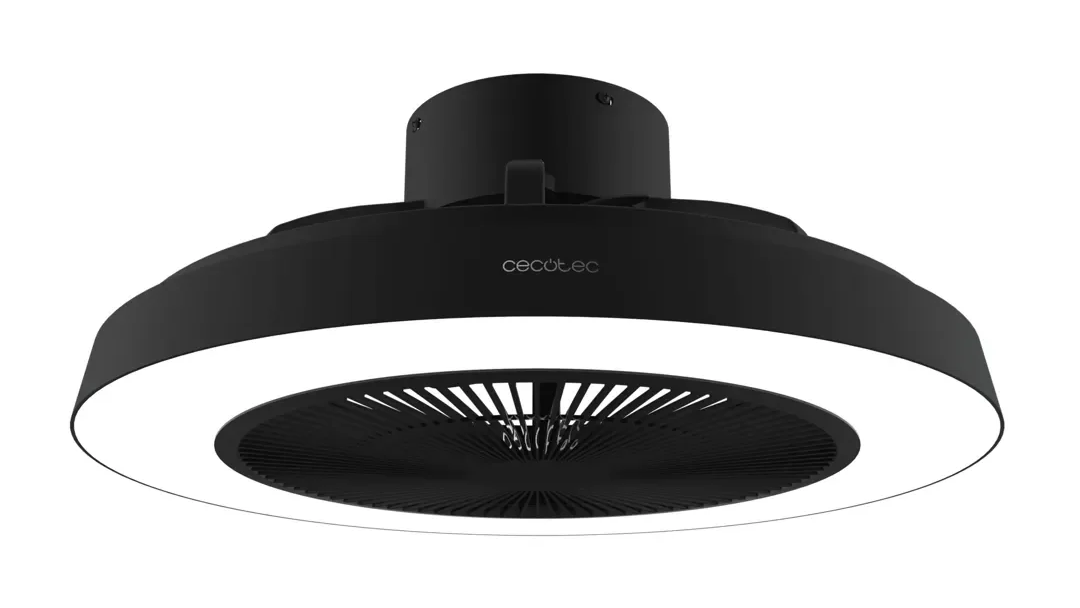
A ceiling light is the main fixture installed on the ceiling of a room to provide general illumination for the space. It encompasses LED flush mounts, pendant lights, recessed spotlights, and models with integrated fans, and is chosen based on room size, ceiling height, and the desired light temperature.
Choosing the right ceiling light is the decision that most changes the feel of a room: it defines how much light there is, what color that light is, and even the perception of the ceiling's height. In this guide, we explain the types that exist, how to get the measurements right, and at what height and point to place each model, using data from the ceiling and wall lighting collection at Merkimarket.
Key facts before choosing
- Function: It provides the general lighting for the room; it is complemented by wall sconces, floor lamps, or spotlights for accent lighting.
- Main types: LED flush mount, pendant light, recessed spotlight/downlight, and ceiling light with integrated fan.
- Diameter rule: Add the length and width of the room in meters in centimeters; the resulting approximate figure in cm is a good diameter for a central light.
- Minimum height: Leave at least 2.1 m of free space from the floor under any pendant light in high-traffic areas.
- Light temperature: Warm (2700-3000 K) for relaxation, neutral (4000 K) for work and kitchens, cool (5700-6500 K) for bathrooms and garages.
- Efficiency: LED is the current standard; it consumes much less than halogen and lasts for thousands of hours.
- Installation: Always check that the ceiling has a cable outlet and an anchor point capable of supporting the fixture's weight.
With these guidelines, you can now get oriented; below, we develop each point.
What is a ceiling light and what role does it play?
A ceiling light is the general light source for a room: the one you turn on when you enter that bathes the whole space uniformly. It should not be confused with accent lighting (wall sconces, LED strips, adjustable spotlights) or task lighting (desk lamps, table lamps). In a well-lit living room, all three layers coexist, but the ceiling light sets the base level of light. That is why it is the first decision to make: if you get it right, the rest only adds nuance.
Types of ceiling lights
There isn't just one "ceiling light," but rather several families with different installation and usage logic. These are the most common in a home:
| Type | Description | Best suited for | Keep in mind |
|---|---|---|---|
| LED Flush mount | Attached to the ceiling, low profile, diffuse light | Hallways, kitchens, bathrooms, and low ceilings | Does not reduce height; ideal when space is limited |
| Pendant light | Suspended by cable, rod, or chain | Dining room, kitchen island, entryway | Requires sufficient clearance underneath |
| Spotlight / downlight | Recessed or surface-mounted, directed light | Plasterboard ceilings, linear lighting | Several are combined to cover the room |
| With fan | LED light and ceiling fan in one body | Living rooms and bedrooms in warm climates | Two functions in a single light point |

Which dimensions to choose based on your room
The most common mistake is installing a lamp that is too small, which looks "lost" on the ceiling, or one that is too large and overwhelming. A simple and reliable rule for a central fixture: add the length and width of the room in meters and translate that number into centimeters of diameter. A 4 x 5 m living room (4 + 5 = 9) easily accommodates a lamp about 90 cm in diameter or a combination that adds up to that visual presence. In small rooms —bathrooms, hallways— a 30 to 40 cm flush mount is usually enough; the sconces and flush mounts in the collection, for example, are around 30 cm wide.
The second critical dimension is clearance height. For a pendant lamp over a walkway, always leave at least 2.1 m from the floor. Over a dining table, the rules change: here, it is better to have it low, about 75-85 cm above the tabletop, because no one will walk underneath it and this concentrates the light on the table without glare.
At what height and where to place it
The position is just as important as the model. For general lighting, the light point is usually at the geometric center of the room, but it is advisable to adjust it to the actual usage: in a dining room, the lamp is centered over the table, not the center of the room, even if they don't coincide. If the ceiling is high (more than 2.7 m), a pendant helps to visually "lower" the light and provide warmth; if it is low, a flush mount attached to the ceiling avoids a cramped feeling and head bumps.

Color temperature and power: getting the light right
Two identical lamps can provide opposite feelings depending on their color temperature, measured in kelvins (K). Warm light (2700-3000 K) is cozy and fits bedrooms and living rooms; neutral (4000 K) is the most versatile for kitchens and work areas; cool (5700-6500 K) works well in bathrooms, garages, or storage rooms where clarity is paramount. Many current models incorporate three selectable tones, which allows you to change the atmosphere without changing the lamp: this is the case for much of the ceiling lighting catalog, with adjustable fixtures that range from warm white to the 5700 K cool white.
Regarding the amount of light, today it is measured in lumens, not watts. As a guideline, a living room requires around 150-200 lumens per square meter for general light, and a kitchen or bathroom slightly more. Look at the lumens on the product sheet and not just the W: an LED with few watts can provide more light than an old, high-consumption halogen.
How to choose and install your ceiling light in 6 steps
- Measure the room. Note the length, width, and ceiling height; this allows you to calculate the diameter and choose between a flush mount (low ceiling) or pendant (high ceiling).
- Define the function. General light, spotlight over a table, or something that also ventilates? This rules out half the catalog at once.
- Choose the light temperature. Warm to relax, neutral to work, cool to see in detail; if in doubt, opt for a model with selectable tones.
- Check the lumens. Calculate the light the room needs per square meter and verify that the lamp provides it.
- Check the electrical installation. Make sure there is a cable outlet at the desired point and that the anchor supports the weight; always cut the power before handling.
- Finalize details. Remote control dimming, compatibility with your ceiling type (plasterboard, concrete), and a finish that matches the rest of the room.
Ceiling fan lamps: two functions in one light point
A very practical trend, especially in areas with warm climates, is the model that combines an LED lamp and a ceiling fan in the same body. You take advantage of the single ceiling light point to illuminate and cool, without having to install two appliances. In the catalog, you will find options such as the Cecotec Aero 600 ceiling lamp, with a low-consumption DC motor, LED light, and three speeds controlled by remote, or the Aero 650 FlowLight model, with three selectable light tones. They are an interesting solution for bedrooms and living rooms where you don't want to sacrifice either light or ventilation.
If you also want to delve deeper into how light transforms the atmosphere of each room, you will find our guide on how to create warmth with light at home useful, and for damp spaces, these lighting ideas for modern bathrooms.
Frequently asked questions about ceiling lights
What is the difference between a flush mount and a pendant lamp?
The flush mount is attached to the ceiling and barely reduces height, making it ideal for low ceilings, hallways, and bathrooms. The pendant lamp is suspended from the ceiling by a cable, rod, or chain and provides more prominence and warmth; it requires sufficient clearance and fits well in dining rooms and entryways.
What diameter should the ceiling light be based on the room?
A useful rule is to add the length and width of the room in meters and translate that number to centimeters in diameter. For example, a 4 x 5-meter room calls for a central fixture of about 90 cm or a set with equivalent presence. For bathrooms and hallways, a 30 to 40 cm flush mount is usually enough.
At what height should a pendant lamp hang over the dining table?
Between 75 and 85 cm above the tabletop. This concentrates light on the surface without dazzling the diners or obstructing the view. In high-traffic areas, however, always leave a minimum of 2.1 meters of free space from the floor.
Can I install a ceiling light myself?
A flush mount or a lightweight lamp with an existing cable outlet is an manageable installation by cutting the power and following the instructions. For heavy models, those with fans, or those requiring a new electrical line, it is advisable to hire an electrician to ensure a secure anchor and connection.
Article written by the Merkimarket editorial team. Product data (power, tones, and measurements) are taken from the Merkimarket lighting catalog; measurements and availability may vary, check each product sheet for current information in Spain.





