

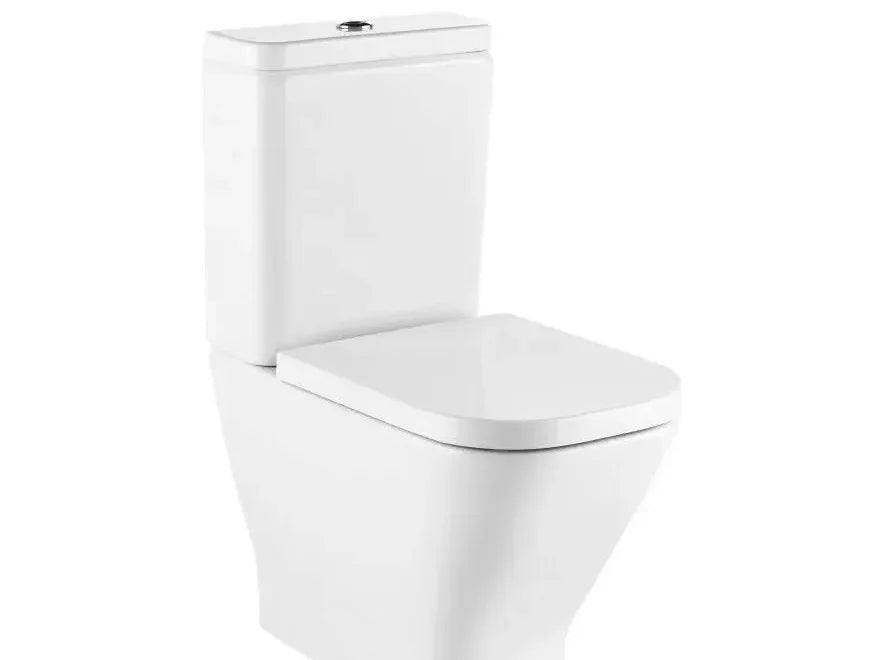
A rimless toilet is a sanitary porcelain bowl manufactured without the traditional interior rim under which dirt and bacteria used to accumulate. Instead, an open perimeter channel distributes water across the entire surface of the bowl, allowing the flush to clean more effectively, resulting in greater hygiene and reduced splashing with every use.
If you are renovating your bathroom and have come across the word "rimless" on every toilet product page, this guide will clarify it for you from start to finish: what it means exactly, why it is considered more hygienic than a conventional toilet, what types exist, and how to choose the one that fits your bathroom. All examples and technical data are taken from actual entries in the Merkimarket toilet catalog.
Key facts about the rimless toilet
- What it is: A bowl without an interior rim or flange; instead, an open channel distributes water around the entire perimeter.
- Why it matters: The hidden area under the rim where limescale, dirt, and bacteria used to accumulate disappears.
- Material: Glazed sanitary porcelain, the same as conventional toilets.
- Formats: Floor-mounted (standard and compact), wall-hung, and smart (smart toilet with washing functions).
- Outlets: Dual (adapts to vertical or horizontal drainage), horizontal, or vertical depending on the model.
- Flush: Dual-flush system to save water; check the exact liters on each product page.
- Warranty: The legal minimum of three years for consumers in Spain, plus the seller's commercial warranty.
With this, you have the big picture; below we go into the details so you can make an informed decision.
What "rimless" means and how it differs from a traditional toilet
"Rimless" is an English term that translates to "without a flange" or "without a rim." To understand it, think of a classic toilet: under the upper edge of the bowl, there is a hollow ring through which the flush water circulates and falls toward the ceramic. That ring, invisible from the outside, is precisely the spot where residue, limescale, and bacteria accumulate, and it is the most uncomfortable area to clean because you cannot reach it well with a toilet brush.
The rimless toilet eliminates that ring. Instead, it incorporates an open channel at the top of the bowl that, when you activate the cistern, releases water in an enveloping path that bathes the entire interior surface. The result is a flush that is visibly more effective and a bowl without hidden nooks. On the outside, it is a normal toilet; the difference is inside, and you notice it every time you have to clean.

Why a rimless toilet is more hygienic
Hygiene is the great argument for this technology, and it is not marketing: there is a very simple physical explanation.
No rim, no hiding place. In a toilet with a rim, the inside of the ring is a closed and damp space, ideal conditions for bacteria to proliferate and for limescale crust to form, which is difficult to see and reach. By removing the ring, that area simply ceases to exist, and with it, the main source of hidden dirt in the toilet.
Cleaning in seconds. Since the entire interior surface is visible and continuous, a pass with a brush or cloth leaves it spotless. You don't have to insert the brush blindly under the rim or resort to specific cleaners for the ring, and weekly cleaning time is reduced.
Less splashing. The perimeter channel is designed so that the water descends in a more controlled and enveloping way, which reduces the splashing outwards that does occur in many traditional models when flushing. It is a detail that is especially appreciated in small bathrooms.
Advantages and disadvantages compared to the rimmed toilet
It is worth having the full balance. This table summarizes how a rimless toilet performs compared to a conventional one in aspects that truly matter in day-to-day life:
| Aspect | Rimless toilet | Traditional toilet (with rim) |
|---|---|---|
| Hygiene | No ring where bacteria accumulate | Hidden area under the rim, hard to reach |
| Cleaning | Fast; the entire bowl is visible | Must reach under the rim with the brush |
| Splashing | Reduced thanks to the enveloping channel | More frequent when flushing |
| Water distribution | Bathes the entire perimeter continuously | Comes out through holes located under the ring |
| Price | Slightly higher within the same range | Somewhat cheaper on average |
| Interior aesthetics | Clean and modern | Classic design |
The only real "but" of the rimless is a slightly higher price within the same range and brand, a difference that has decreased significantly today because most manufacturers now include it as standard. In return, you gain hygiene and cleaning convenience throughout the entire lifespan of the toilet.
Types of rimless toilets in the catalog
Rimless technology is not a toilet format, but a feature that you will find in almost all families today. These are the main types, with real examples from the catalog:
Floor-mounted, compact. Compact models reduce the depth of the bowl to save space, ideal for small bathrooms. A good example is the Roca The Gap Square compact toilet, at just 36.5 cm and with a dual outlet, which adapts to both vertical and horizontal drainage.
Floor-mounted, standard. This is the simplest renovation option because it directly replaces the classic toilet bolted to the floor. The Roca Victoria toilet combines rimless technology, vertical outlet, and dual-flush cistern, a very common configuration in Spanish homes.

Wall-hung. It is anchored to an in-wall frame, leaving the floor free under the bowl and making cleaning even easier. An affordable example is the Aquore Turin compact toilet, wall-hung, rimless, and with a soft-close lid.

Smart toilet. In the high-end range, smart toilets add washing functions with warm water, drying, and self-cleaning to the rimless technology, Japanese-style. They are the most complete (and most expensive) option in the catalog.
As a budget guide, the catalog ranges from simple models for around €150–200 to smart toilets that exceed €1,400; prices and availability vary, so check each product page for current information.
How to choose your rimless toilet in 4 steps
- Measure your drain outlet. Check if your drainage is vertical (into the floor) or horizontal (into the wall). If you are not sure or want a margin, choose a dual outlet model, which works for both.
- Choose the format based on your space. Small bathroom: a compact model with reduced depth. Seeking modern aesthetics and a clear floor: a wall-hung model (requires an in-wall frame). Quick renovation without construction: a standard floor-mounted model.
- Decide on height. "Comfort height" models make sitting and standing easier, something to consider if there are elderly people or those with reduced mobility in the home.
- Choose the lid and seat. Prioritize a soft-close lid to avoid slamming and, if you are looking for total hygiene, consider a removable seat that facilitates deep cleaning.
Installation, cleaning, and maintenance
The installation of a rimless toilet is identical to a conventional one: it does not require special plumbing or a different cistern, just respecting the type of outlet (vertical, horizontal, or dual) and, for wall-hung models, mounting the frame beforehand. If you are replacing your current toilet, the essential thing is to measure the distance between the drain and the wall to ensure compatibility; our guide on types of toilets, outlets, and measurements will help you.
The great advantage lies in daily maintenance: a regular bathroom cleaner and the brush are enough, without aggressive products or specific descalers for the ring. Avoid overly abrasive cleaners, which over time can damage the glaze, and check the dual-flush mechanism from time to time, as it is the part that is used the most. If you are also doubting between a floor-mounted model and one anchored to the wall, you might be interested in the comparison wall-hung toilet vs floor-mounted toilet.
Frequently asked questions about rimless toilets
What is a rimless toilet?
It is a toilet bowl manufactured without the interior rim or flange of traditional models. Instead of that hollow edge, it incorporates an open channel that distributes the flush water across the entire surface of the bowl, improving cleaning and hygiene.
Is a rimless toilet really more hygienic?
Yes. By eliminating the inner ring, the closed and damp area where bacteria and limescale accumulate in conventional toilets—and where it is most difficult to clean—disappears. The entire bowl is accessible, so it stays clean with less effort.
How is a rimless toilet cleaned?
Just like any toilet, but faster: with the brush and a regular bathroom cleaner. Since there is no rim to reach under, you do not need specific products or tools for the ring.
Does a rimless toilet use less water?
Rimless technology improves the efficiency of water usage to clean the bowl with the same flush. The actual savings come from the dual-flush system that most of these models are equipped with; check the exact liters on each product page.
Article written by the Merkimarket editorial team. Technical data (formats, outlets, and models) taken from the Merkimarket toilet catalog entries. Price ranges and availability may vary; check each page for current information in Spain.





